
Blog › DVA claims
How to Make a DVA Claim: Step-by-Step Guide for Veterans
What the DVA claim process actually involves in 2026 — the diagnosis, the Statements of Principles, lodging through MyService, how long it takes, and where claims come unstuck.
If you served and something still hurts — your back, your knees, your hearing, your sleep, your head — you are entitled to make a claim. Most veterans know that much. What almost nobody explains is how the DVA claim process actually works, what the Department is deciding, and why two veterans with the same injury can get completely different answers.
This guide walks through it in plain language: what a DVA compensation claim is, the steps from start to finish, what changed on 1 July 2026, how long it takes, and where claims usually come unstuck. It is general information rather than legal advice, but it is the explanation we wish every veteran had before they lodged.
What a DVA claim actually is
A DVA claim is a request for the Commonwealth to accept that an injury, illness or condition is related to your service. That acceptance is called initial liability, and it is the gate everything else sits behind.
Once liability is accepted for a condition, that condition can be treated at DVA's expense, it appears on your DVA Veteran Card, and it becomes eligible for further compensation — permanent impairment payments, incapacity payments, rehabilitation and household support. Until liability is accepted, none of that is available for that condition.
So the first claim you lodge is not about money. It is about getting the condition recognised. Everything downstream depends on it.
What changed on 1 July 2026
For decades, veterans' compensation ran under three separate Acts — the MRCA, the DRCA and the VEA — and which one applied depended on when and where you served. It was, frankly, a mess.
From 1 July 2026, new compensation and rehabilitation claims can no longer be lodged under the VEA or the DRCA. Every claim lodged on or after that date is assessed under the Military Rehabilitation and Compensation Act 2004 (MRCA), no matter when you were injured or when you served. Claims lodged before 1 July 2026 continue to be processed under whichever Act applied at the time, and conditions already accepted under the VEA or DRCA are automatically recognised under the MRCA — you do not need to reapply, and existing payments continue.
In practice this means the process is now the same for everyone lodging today. One Act, one pathway. The reform also brought changes worth knowing about individually — new Gold Card pathways, presumptive liability, and acceptance of medical events that happened on duty. See the full list of 2026 changes.
Step 1: Get a diagnosis for every condition
This is the step veterans skip, and it is the step that sinks the most claims. DVA cannot accept liability for "my back" or "my nerves". It needs a named condition, diagnosed by a qualified health professional, for each thing you are claiming.
That matters more than it sounds. "Back pain" is a symptom. Thoracolumbar spondylosis is a diagnosis with a Statement of Principles attached to it. One can be assessed; the other cannot. Claims lodged with symptoms instead of diagnoses generate requests for more information, which is where months disappear.
A proper diagnosis usually means a clinical assessment, and often imaging or audiometry to confirm what is actually going on. If you have carried something for fifteen years without ever having it formally named, this is where you start.
Step 2: Work out what you can claim
Most veterans claim two or three conditions. Most veterans are entitled to claim considerably more.
Your service record typically contains far more than you remember — the ankle you rolled on exercise, the shoulder you strapped up and kept working, the ringing in your ears you stopped noticing, the sleep that never came right after deployment. Each of those, if it can be diagnosed and linked, is a separate claimable condition.
This is exactly what a Chart Review is for: every page of your service and civilian medical record read end to end, and every claimable condition identified, dated and sorted. It is the single most useful thing you can do before lodging, because you cannot claim what you do not know is there.
Step 3: Understand what DVA is testing
DVA does not simply decide whether your condition "seems" service related. Each condition is assessed against a Statement of Principles (SoP) — a legislative instrument written by the Repatriation Medical Authority that lists the specific factors capable of connecting that condition to service.
An SoP for, say, sensorineural hearing loss will set out particular noise exposure levels over particular periods. An SoP for a lumbar condition will set out specific load-bearing, trauma or occupational factors. Your claim succeeds if the evidence shows at least one of those factors is met, and that it was met during or as a result of your service.
That is why the wording of the medical evidence matters so much. A supportive letter saying "this is likely related to his time in the Army" does not engage any SoP factor. A report that names the SoP, works through each factor, and states which are met and not met — and why, against the actual clinical entries — gives the delegate everything the legislation asks them to consider. You can read the full text of every current SoP in our SoP Library.
Step 4: Lodge the claim
The fastest route is online through MyService, which you access with a myGov account linked to DVA. In MyService you select Apply now, choose Initial Liability, and follow the prompts, listing each diagnosed condition. If you would rather use paper, the equivalent form is the D2051, and you complete one for each condition claimed.
Lodge with your evidence attached rather than promising to send it later. DVA's own guidance is blunt about this: provide complete and accurate information, include supporting reports and documents, and respond quickly to requests. Every gap becomes a letter, and every letter becomes weeks.
One useful shortcut: some conditions now fall under presumptive liability. If you claim an eligible presumptive condition and supply a confirmed diagnosis from an appropriately qualified practitioner along with all required information, the claim may be determined in under two weeks.
Step 5: What happens after you lodge
DVA runs initial checks to confirm they have what they need, then allocates the claim to a claims support officer, who assesses the medical evidence and your service records before a determination is made. You should hear from the Department roughly every 30 days by phone, email, SMS or letter.
Be realistic about timing. For MRCA initial liability claims received in the last twelve months, the average processing time was around 145 days — of which roughly 99 days sat with DVA and 46 days were spent waiting on information from someone else. Allocation to an officer alone averaged 13 days, and the average age of claims still on hand was around 192 days.
Read those numbers again, because they contain the lesson: nearly a third of the wait is the Department chasing evidence that could have been lodged at the start.
Step 6: Treatment while you wait
You do not always have to wait for a decision to get treated.
- Non-liability health care covers treatment for certain conditions — including mental health conditions, cancer and pulmonary tuberculosis — without any need for them to be accepted as service related.
- Provisional Access to Medical Treatment (PAMT) provides free treatment for one or more of 20 specified conditions while your MRCA claim is being assessed.
If you are struggling now, ask about both. They exist precisely because the claim process takes time.
Step 7: After liability is accepted
Acceptance is not the end of the process — it is the start of the next one. Once liability is accepted, DVA completes a needs assessment: a conversation about what supports, services and payments you may need.
From there, the significant one for most veterans is permanent impairment compensation, which pays for the lasting effect of an accepted condition. Impairment is rated using the GARP guides, and the rating decides the payment. It is worth having that assessment done properly and by someone who does them regularly, because points translate directly into dollars.
The problems that catch veterans out
Most claims that go wrong go wrong for one of a small number of reasons, and all of them are avoidable.
Claiming too few conditions. The single most expensive mistake. Impairment ratings combine rather than compete, so a condition you never claimed is not a small loss — it is a permanent one that also depresses every later assessment. Veterans routinely claim the three things they think about and leave a dozen documented conditions in the file untouched.
A diagnosis that does not match the instrument. DVA decides against a named condition. "Back pain" is a symptom, not a diagnosis, and there is no Statement of Principles for it. "Thoracolumbar spondylosis" is a diagnosis, and there is.
Guessing the onset date. Onset is when signs and symptoms first appeared, not when someone finally named it. Getting this wrong can put you outside a presumptive liability window that you were comfortably inside.
Assuming a pre-existing condition cannot be claimed. It can, if service made it permanently worse. Every Statement of Principles carries a second set of factors written for exactly that — see aggravation and worsening.
Treating sequelae as part of the original condition. They are not. A downstream condition has to be claimed and accepted in its own right before it counts for anything.
Never mentioning it during service. This is the one veterans feel worst about and it is the least fatal. Contemporaneous records help, but they are not the only evidence, and for operational service the standard is a reasonable hypothesis rather than certainty.
How to avoid delays
DVA's own published processing figures run to months. Some of that you cannot control. A surprising amount you can.
- Lodge complete, not fast. A claim missing a diagnosis or a service record goes into a request-for-information loop that adds weeks each time. One properly assembled claim beats three rounds of correspondence.
- Get your full service record first. Almost every delay traces back to evidence that existed but was not in front of the delegate.
- Use the right condition name. A claim lodged under a symptom has to be reclassified before it can be assessed at all.
- Claim everything at once. Conditions assessed together take one process. Drip-fed claims restart the clock each time.
- Check presumptive liability before you lodge. If your condition, service and onset match the instrument, the causation argument disappears entirely — our free checker tells you in a few seconds.
- Ask about provisional access to treatment. For eligible conditions treatment can begin before liability is decided.
- Keep your own copies. Of everything you send and everything you receive.
If your claim is rejected
A rejection is not the end of the road, and it is not a verdict on whether you are injured. In our experience most refusals turn on something the delegate could not find rather than something that was not true: no formal diagnosis, the wrong SoP, or a factor that was genuinely met but never demonstrated in the evidence.
Those decisions can be reviewed, and a review is decided on evidence rather than argument. If you have been refused or under-rated, the fix is usually to produce the medical document that answers the reasons given — see VRB and determination appeals.
Where VHC fits
The Veterans Health Centre is a doctor-led practice in Ipswich, Queensland, founded by Dr Thomas Perkins, working exclusively with current and former ADF members. We do not lodge your claim or argue it for you — advocates and lawyers do that, and we work alongside them constantly. What we do is produce the medical evidence the decision turns on.
That means reading every page of your record, examining you, arranging imaging where it is needed, and writing a Diagnostic Assessment for each condition: the diagnosis, the referenced timeline, and every SoP factor argued to met or not met against the exact clinical entry that proves it. If you want to see what that looks like before you commit to anything, our Claims Library holds 366 example Diagnostic Assessments across 307 conditions, and the SoP Library holds 357 Statements of Principles in full.
Frequently asked questions
How do I start a DVA claim?
Get a formal diagnosis for each condition you intend to claim, then lodge through MyService using your myGov account — select Apply now, then Initial Liability. If you prefer paper, use form D2051, one per condition. Lodge with your medical evidence attached rather than sending it later.
How long does a DVA claim take?
For MRCA initial liability claims received over the last twelve months, the average was about 145 days, roughly 99 of those with DVA and 46 spent waiting on information from elsewhere. Claims for eligible presumptive liability conditions lodged with a confirmed diagnosis and complete information can be determined in under two weeks.
Which Act does my claim fall under?
Every claim lodged on or after 1 July 2026 is assessed under the MRCA, regardless of when you served or when you were injured. Claims lodged before that date continue under the VEA or DRCA, and conditions already accepted under those Acts are automatically recognised under the MRCA.
Do I need a lawyer or an advocate?
Not necessarily. Free advocacy support is available through ex-service organisations, and DVA offers its own claims lodgement assistance on 1800 VETERAN (1800 838 372). What you do need is medical evidence that engages the Statement of Principles for each condition — that is a clinical task, not a legal one.
Can I claim a condition that was never recorded during service?
Often, yes. Plenty of service injuries were never formally documented at the time, either because you pushed through or because reporting them carried a cost. What matters is whether the condition can be diagnosed now and linked to service on the evidence available — which is why a thorough review of the whole record matters so much.
What does it cost to have VHC prepare the evidence?
Every stage of DVA claims work is $600 + GST, fixed and quoted in writing before work starts, and payable only once that stage is delivered. A Permanent Impairment Assessment is $1,500 + GST. We never take a percentage of your compensation.
Talk to us
If you are about to lodge, have lodged and heard nothing, or have been knocked back and don't know why, we can tell you where the evidence stands before you spend anything.
Call 0429 146 039 or email reception@vhc.org.au to arrange a no-obligation consult with the Veterans Health Centre.
This article is general information for Australian veterans and is not legal or financial advice. Your entitlements depend on your service, your conditions and the evidence available.
Read next
- Guide: Statements of Principles explained
- Guide: your DVA claim was rejected — what now?
- Guide: mental health claims — PTSD and depression
- DVA claims — chart reviews and diagnostic assessments
- SoP Library — every DVA Statement of Principles
- Claims Library — 366 Diagnostic Assessments
- Fees — $600 + GST per stage
- Permanent Impairment Assessments (GARP)
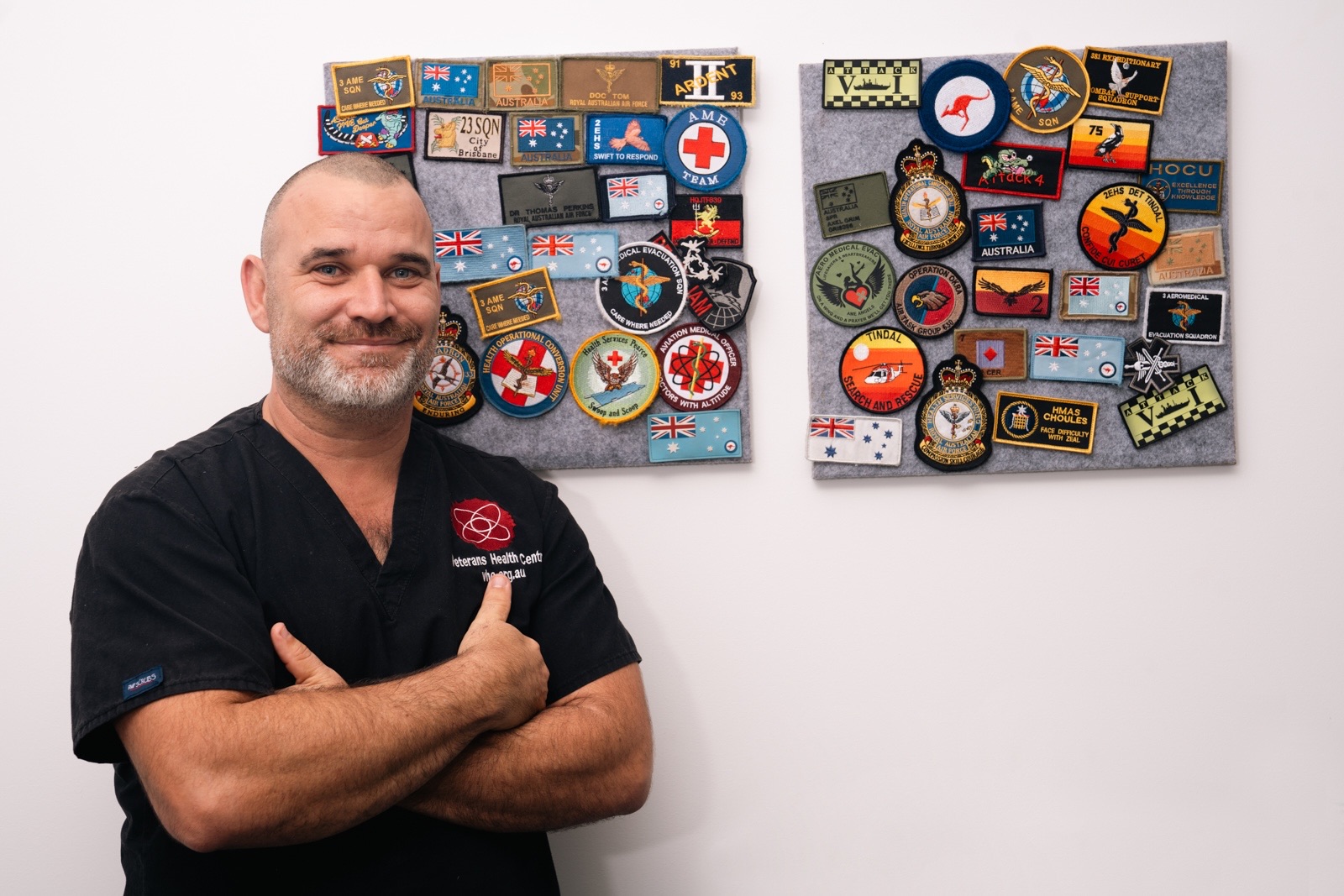
Reviewed by Dr Thomas Perkins
Founding doctor, Veterans Health Centre · former RAAF aviation medical officer · 13 years working exclusively with ADF members and veterans. Full profile →