
CSC Invalidity Class Appeals for ADF Veterans
Medically discharged, or approved for a retrospective medical discharge, and given a class of invalidity benefit you believe is wrong? The Commonwealth Superannuation Corporation classifies invalidity benefits as Class A, B or C, and that classification decides what you are paid for the rest of your life.
A class is only as good as the medical evidence it was decided on. We reconstruct your capacity for civil work as at your date of discharge, demand by demand against the employment CSC itself chose, so the classification can be reconsidered on the medical facts.
At a glance
- Chart Review$600 + GST
- Assessment consultation$600 + GST
- CSC appeal report$600 + GST
- Commission on any benefit0%
What is a CSC class appeal?
When CSC accepts that you were, or should have been, retired on invalidity grounds, it makes a second and separate decision under Rule 22: your class. Rule 22(1) asks for the percentage of your incapacity in relation to civil employment — 60 per cent or more is Class A, 30 to under 60 per cent is Class B, under 30 per cent is Class C. Rule 22(2) limits CSC to three matters: your skills, qualifications and experience; the kinds of civil employment someone with those could reasonably undertake; and how far the impairment that caused your invalidity diminished your capacity for that work. It is judged at your date of discharge, and it measures lost capacity for work, not medical impairment points. Veterans are often placed in Class C on thin reasoning — a MEC 1, a single word such as “Small”, no percentage at all. That decision can be answered, and the answer is medical evidence. VHC produces it: a Chart Review, an assessment, and a Rule 22 report that rebuilds the delegate’s decision step by step. $600 + GST per stage.
See an example CSC appeal and its tables.
A real VHC classification appeal, anonymised. CSC had approved the member’s retrospective invalidity under Rule 30, then classified him Class C, finding his capacity for his own trade diminished by only a “Small” degree. The report sets out why the evidence supports Class A, with Class B in the alternative.
Beside it are the two tables attached to the report: the requirements of his ADF job, and the civilian demand map for the Site Response Officer employment kind CSC chose, each requirement rated against the evidence at discharge. Names, dates, reference numbers, units and employers have been changed, and the evidence extracts (images of his source pages) are left out of the tables. The same member’s Rule 30 Letter of Support is on the retrospective discharge page.
What is inside the report.
The report has four jobs: show where the delegate went wrong, establish your impairment at discharge, show what it did to your work, and conclude in the words of CSC’s own rule.
The test, quoted from your decision
Rule 22 is quoted from the legislation extract at the back of your own decision notice, because schemes differ. The report then says plainly that the percentage is lost capacity for civil work, that impairment points are used only as evidence of severity, and that everything is judged at the date of discharge.
Deficiencies in the delegate’s decision
Each error stated in turn, with the decision’s own words quoted. In the example the delegate accepted four conditions as each severe enough to warrant discharge, then found the member “fully employable and deployable, with no employment or deployment restrictions”. Both findings cannot stand, and CSC had already made the first.
Your medical condition at separation
The retiring impairments as they should be found, each with its onset date; the contemporaneous evidence from the service record (in the example, 119 days of restricted duty or unfitness in the final two years); and which later assessments can and cannot tell us about the day you left. A rating made near discharge is the measure for that condition, not a higher one made years later.
Function at discharge, and after
What you could and could not do on the day, then every job you held afterwards — the duties, the restrictions, the leave, and what the specialists who saw you at the time said about it. Work done against medical restriction, with a brace, or at recognised risk of injury is not unimpaired capacity, and the report says why.
Demand-by-demand tables
Two tables. The first maps every requirement of your ADF job. The second takes the civil employment kind CSC itself chose, splits its description into separate demands — “regularly required to walk, stand, run and climb”, heavy carrying, squatting, emergency equipment, decision-making under stress — and rates each against the evidence. A demand you could meet only with accommodation is answered No.
Degree of incapacity and conclusion
Your skills, qualifications and experience at discharge, the range of work they fitted you for, and how much of it your impairments closed. In the example every qualification the member held was for physically demanding emergency work, and the one employment kind CSC chose was closed to him. The report ends with the percentage band, the class, and the decision summary as it should read, in CSC’s own order.
Errors we often find in CSC decisions.
We check each step of the delegate’s method against your records: your profile, the evidence register, the retiring impairments, the employment kinds, their demands, the degree of diminished capacity and the class. These are the errors that come up again and again — most of them appear in the example.
Approved for invalidity, then “fully employable”
A decision that accepts your conditions as grounds for invalidity retirement cannot also rely on you being fully employable and deployable. Nor does Rule 22 require each condition to qualify “in isolation”; it looks at the impairment that caused the invalidity as a whole.
A MEC 1 used to defeat CSC’s own finding
A MEC answers a different question. A MEC 1 recorded at separation, or a review that predates a later injury, cannot be reconciled with a Rule 30 approval. We show what the records around it actually say.
No percentage, no analysis
Rule 22(1) requires a percentage. Decisions often give a single word — “Small” — with no demand-by-demand analysis of the employment description they quote, and specialist restrictions recorded but never mapped against it.
The wrong injury, the wrong date, the wrong word
A “full recovery” quoted from an older injury that predates the one that matters; a form misdated; an entry misread — in the example, “R THUMB” transcribed as “Right Tinnitus”. We check the decision’s evidence summaries against the source pages.
Later qualifications used to measure capacity at discharge
Roles that depended on qualifications gained years afterwards say nothing about what you could do on the day you left. In the example the delegate relied on positions that began 11 to 13 years after discharge.
Psychological evidence missed or discounted
The presenting entry in an in-service psychology record overlooked in favour of the follow-up, or years without treatment read as an absent condition rather than an untreated one. Where CSC has itself accepted a psychological condition was present at transition, we quote it back.
What we will tell you honestly
Sustained full-time work in the same field after discharge is the strongest point against a higher class. We do not ignore it: we set out the accommodations you relied on, the restrictions you worked against and the risk the specialists recorded, and we tell you before you go further whether the evidence supports Class A, Class B, or neither. CSC’s own classification guideline lists monetary earnings as not considered, so the case is argued on the quality, nature and importance of the work you lost, never on income.
How a CSC class appeal works with us
There is no government funding for this work, so it is billed to you directly — and only stage by stage. We will tell you honestly, before you commit, whether your record supports a higher class.
Send us your CSC determination
The decision notice (draft or final) and its Statement of Reasons, including the employment kind CSC chose and its description. We read it against your record to see what was considered, what was left out, and what was misread.
Chart Review
Every page of your service and civilian medical record read and organised by condition, handwritten notes included. From it we document your impairment at discharge against your ADF job, every restriction in your last 24 months of service, every job you have held since, and every permanent impairment assessment made after you left, with the exact time from separation. If we did your retrospective discharge, this carries over and is not charged again.
Assessment
A consultation and examination establishing your function at discharge and your work history since, so each demand of the CSC employment kind can be rated against the evidence.
Your appeal report
The Rule 22 report shown above, about five pages: the errors in the decision, your impairment at discharge, the work difficulties against the employment kind CSC chose, and the class the evidence supports, with the alternative. It is sent with the two requirements tables and their evidence extracts, ready for you to lodge with CSC.
A complete CSC class appeal — $1,800 + GST, no further fees. Never a percentage of your benefit.
Separate from a retrospective discharge
A retrospective medical discharge (Rule 30) and a class determination or appeal (Rule 22) are two different CSC decisions, answered by two different documents. If CSC has not yet accepted that you should have been retired on invalidity grounds, you need the retrospective discharge service first: a Chart Review and a Letter of Support. This page is for the second decision, once CSC has made it and placed you in a class you dispute.
How our reports are written.
A CSC delegate has to be able to check every sentence against your file. The documents are written so they can.
Quoted, dated and referenced
Every fact comes from a document. Findings are quoted word for word, with the date, the author and the page of your file. What a clinician found is kept separate from what you told them, and time intervals are stated exactly — “ten months after discharge”, not “soon after”.
Opinion labelled as opinion
The doctor writes in the first person, and every conclusion is marked “In my opinion”, stated on the balance of probabilities. Plain words, short sentences, Australian spelling and dates written out in full.
Gaps flagged, never filled
Where something cannot be confirmed from the records, it is marked in bold square brackets — [To verify with the member.] or [Obtain if possible.] — and the list of documents reviewed ends with what was not available, so CSC knows what to ask for.
The requirements tables
Two landscape tables: one for your ADF job at discharge, and one for each civil employment kind CSC named in its decision, and only those. Columns: the requirement (in CSC’s own words where it quotes them), whether it is essential, whether you could do it at discharge, and why, with the evidence quoted. A requirement you could meet only with bracing, strapping, rest or modified duties is rated No, with the accommodation named. One essential requirement you could not meet closes that job.
Evidence extracts
The tables carry the source pages behind every rating. Each typed record is cropped to the passage relied on, with the quoted words highlighted; handwritten pages are shown in full. Each extract is labelled and cross-referenced from the table row it supports — “Extracts: 1a (p.189), 1b (p.587)”.
The case against, stated fairly
Every table ends with a count of the requirements you could and could not meet, then an “Against this” paragraph: the fit MEC, the fitness test passes, a voluntary transfer, work done after discharge. Each is answered where the records support an answer. A report that ignores the weak points does not survive review.
DVA and CSC are different bodies, with different tests.
Veterans are routinely told the two are connected. They are not. They are separate frameworks, administered by separate organisations, asking separate questions — and an answer from one does not decide the other.
Department of Veterans’ Affairs
DVA deals with the consequences of service itself. It accepts liability for injuries and illnesses caused or aggravated by service, pays compensation for them, funds treatment and rehabilitation, and issues the Gold or White Card that pays for your ongoing healthcare.
Its question is one of causation: did your service cause or contribute to this condition? That is decided against a Statement of Principles.
Commonwealth Superannuation Corporation
CSC administers the military superannuation schemes — MSBS, DFRDB, ADF Super and ADF Cover. Where a member is medically discharged, CSC decides whether an invalidity benefit is payable and, if it is, what class applies.
Its question is one of capacity: how much has your condition reduced your capacity for civil employment, as at the day you left? Causation is not the test, and a DVA acceptance does not answer it.
How the two run together
Because they are separate, a benefit from one does not shut off the other. An invalidity pension or a superannuation payout from CSC does not stop you claiming compensation from DVA, and DVA acceptance of a condition does not by itself set your CSC class. The practical overlap is the evidence: the medical work done properly for one is frequently the same material that supports the other. A Chart Review that documents every condition, dates it, and describes the functional loss it causes serves a DVA claim and a CSC classification alike — which is why it is worth having that record assembled once, and assembled well.
CSC appeals FAQ
CSC put me in Class C because I could do my “own job outside the ADF”. Can that be challenged?
Yes, if the evidence shows you could not meet that job’s essential demands safely and within your specialists’ restrictions. We take the employment kind CSC chose, split its description into separate demands and rate each one. If the only work you were qualified for was closed to you, that goes to Class A. We always set out Class B as the alternative, because CSC may respond by adding lighter kinds of work.
I kept working for years after I left. Does that rule out a higher class?
Not by itself, but it is the strongest point against you and the report has to deal with it. Work done with a brace, against specialist restriction, with frequent leave, or at a risk of injury your doctors recorded is not the same as unimpaired capacity. We will tell you plainly how much weight it is likely to carry in your case.
My conditions are much worse now. Does that help?
Only for what it shows about the date of discharge. CSC classifies you as you were when you left, so a high DVA rating made many years later is not the measure at discharge. A rating or specialist examination close to discharge carries more weight, and the report explains which evidence is nearest to the date that matters.
How long do I have to respond?
A draft decision gives you a short period to send further evidence, often 14 days, and extensions are commonly granted if you ask. A final decision can be reconsidered if you apply within the time stated in the decision notice. Send us the notice as soon as you receive it so we can tell you what is achievable in that time.
Who can make a CSC invalidity claim?
Any current or former ADF member whose injuries, illnesses or conditions have reduced their capacity for civilian work. The question CSC asks is about capacity, not about whether the condition was caused by service — that is DVA’s test, and it is a different one.
How long does CSC take to decide?
It varies with the complexity of the file and how much material CSC has to gather itself. Rather than guess, we look at your record first and give you a realistic expectation once we can see what the reconsideration will involve.
Do you work with veterans outside Queensland?
Yes. We work with current and former ADF members Australia-wide. The Chart Review is done from your records wherever you are, and assessments are arranged by telehealth where an in-person examination is not practical.
What do I need to send you?
Your CSC determination and any medical material it relied on, your service and civilian medical records, and anything that shows how the conditions affect your day-to-day function and your ability to work. If you are missing something, we will tell you how to obtain it.
How does the process actually work?
We take you through it one stage at a time: the record is read and organised, your degree of incapacity is assessed, and the findings are written up as a report you lodge with CSC. Nothing is charged until a stage is delivered, and we tell you honestly if the evidence does not support a higher class.
Related pages
Dr Thomas Perkins
The expert in veterans’ medicolegal medicine — Expert DVA Doctor.
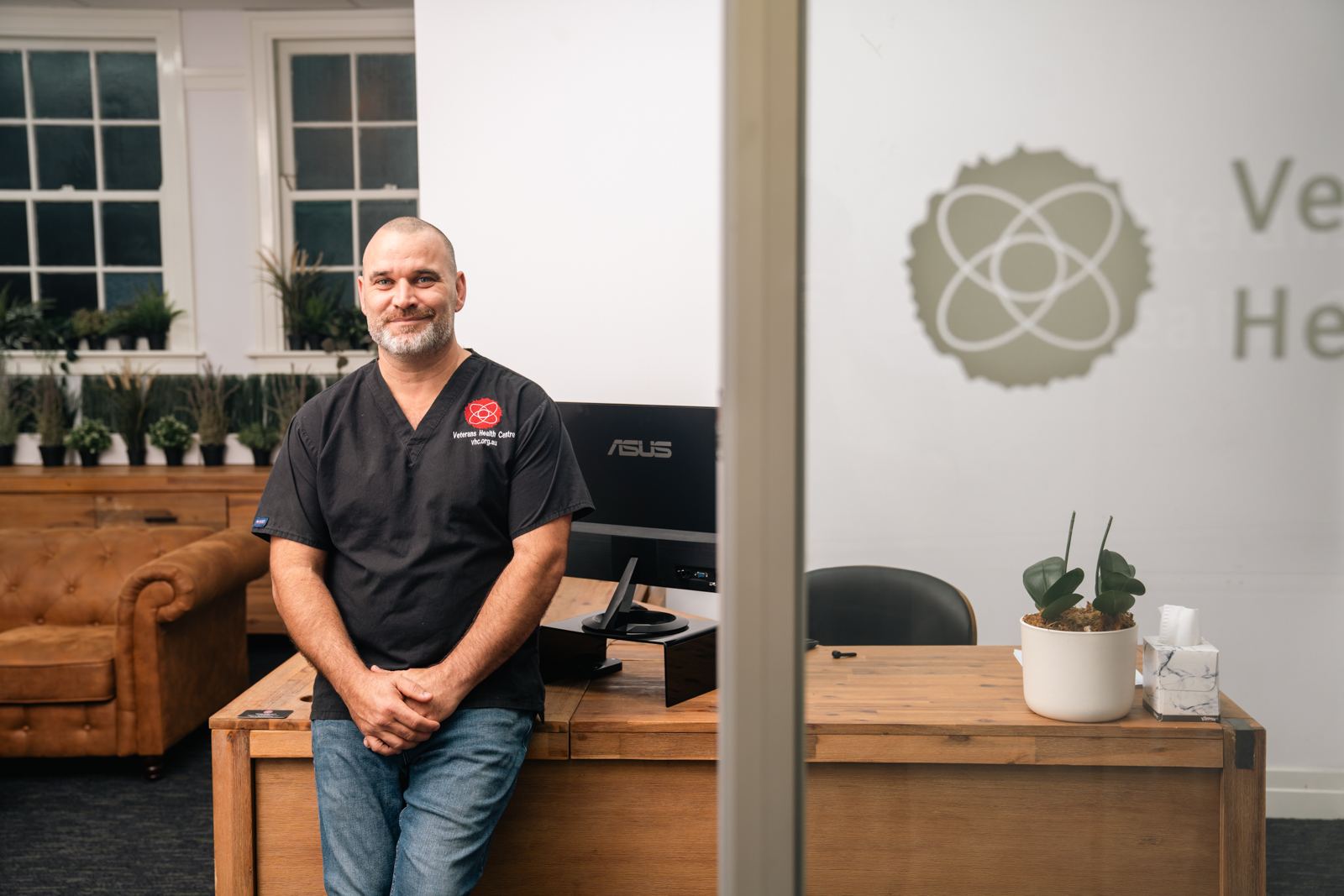

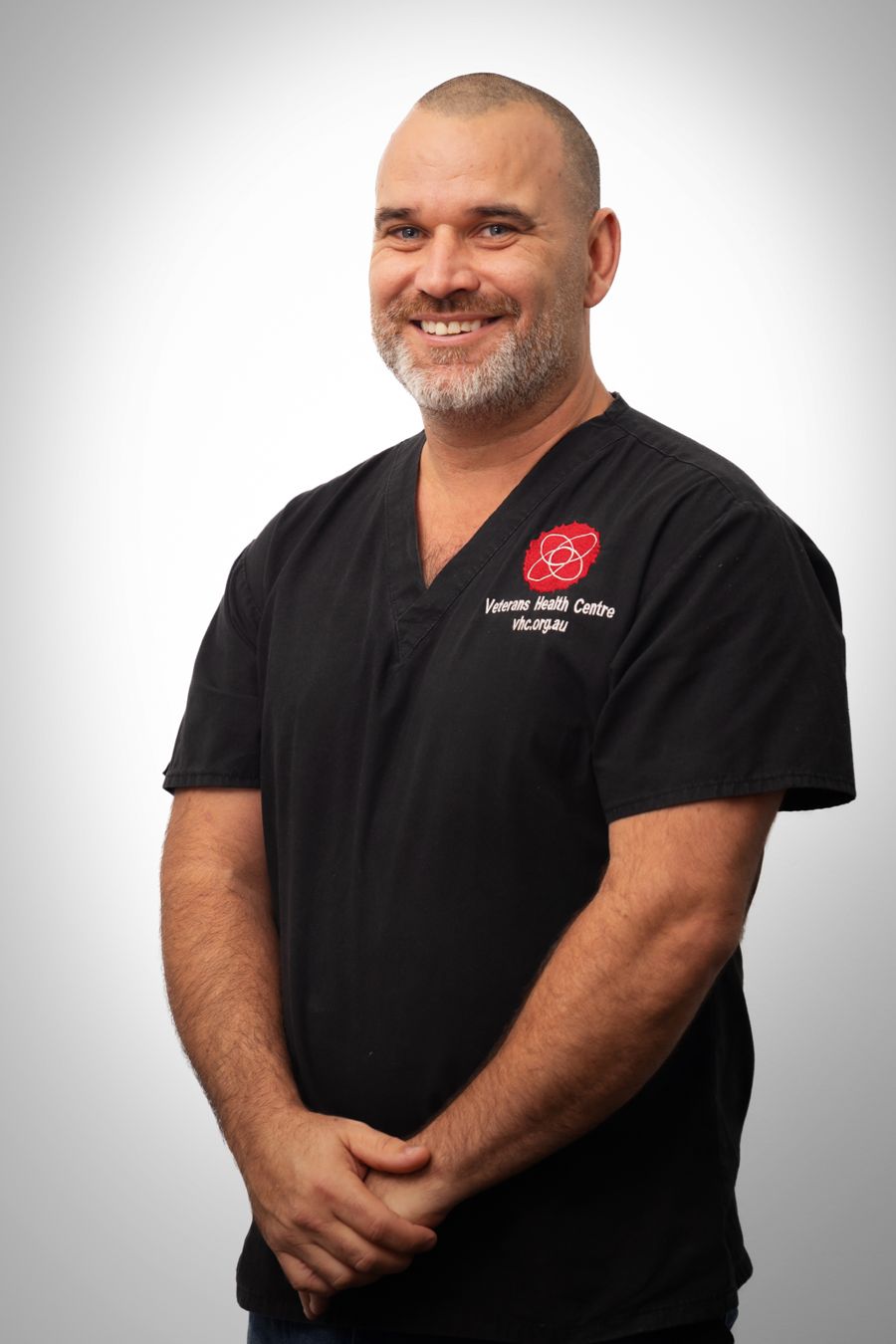
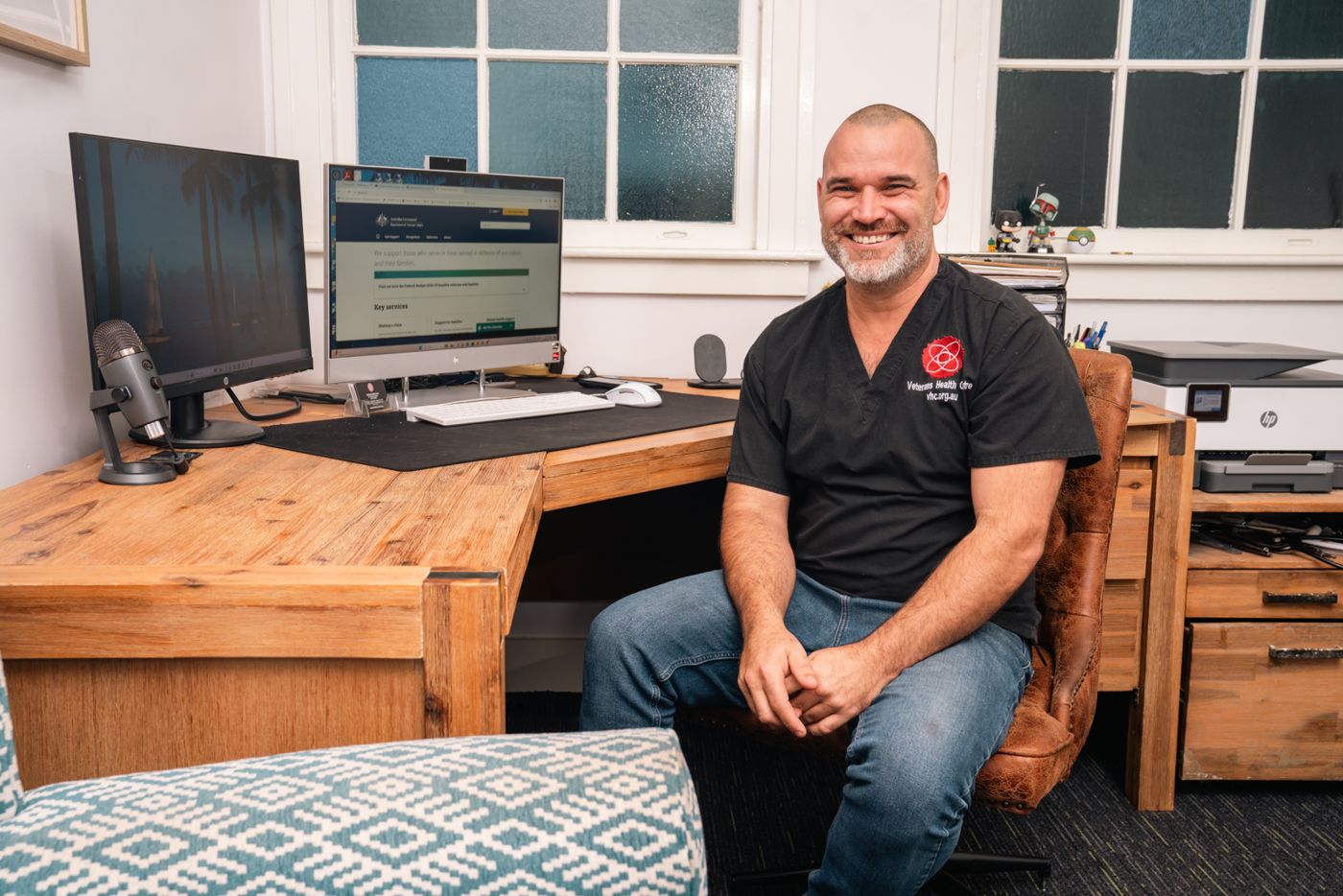
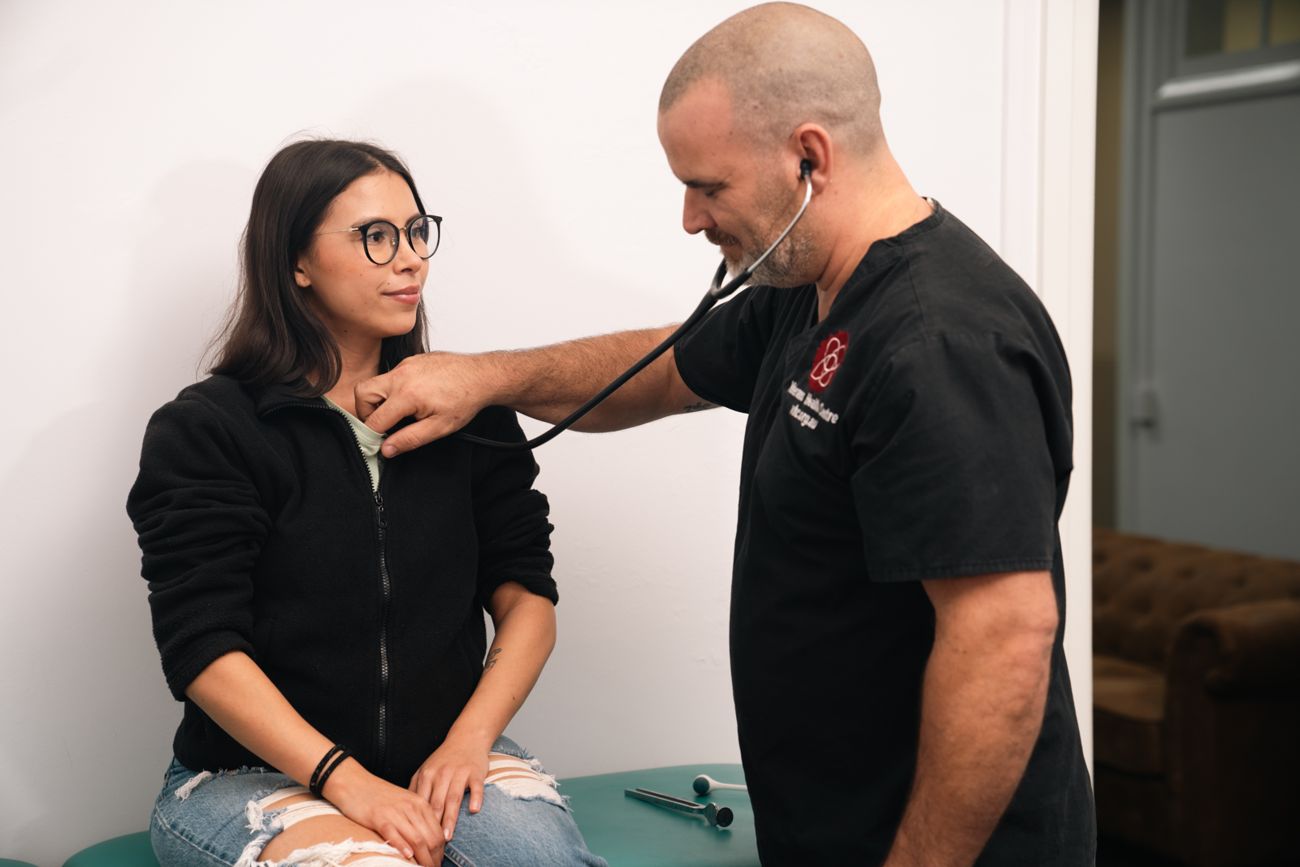
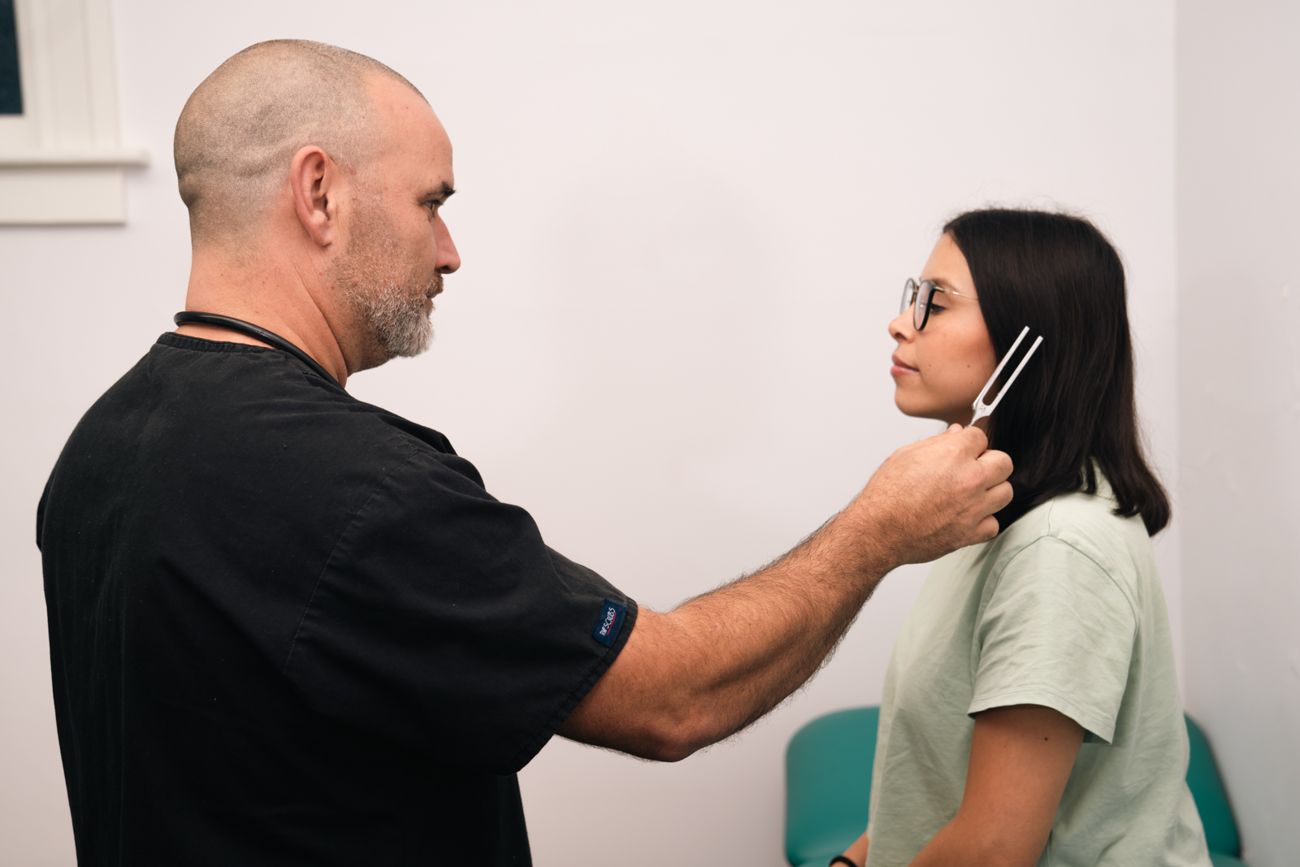
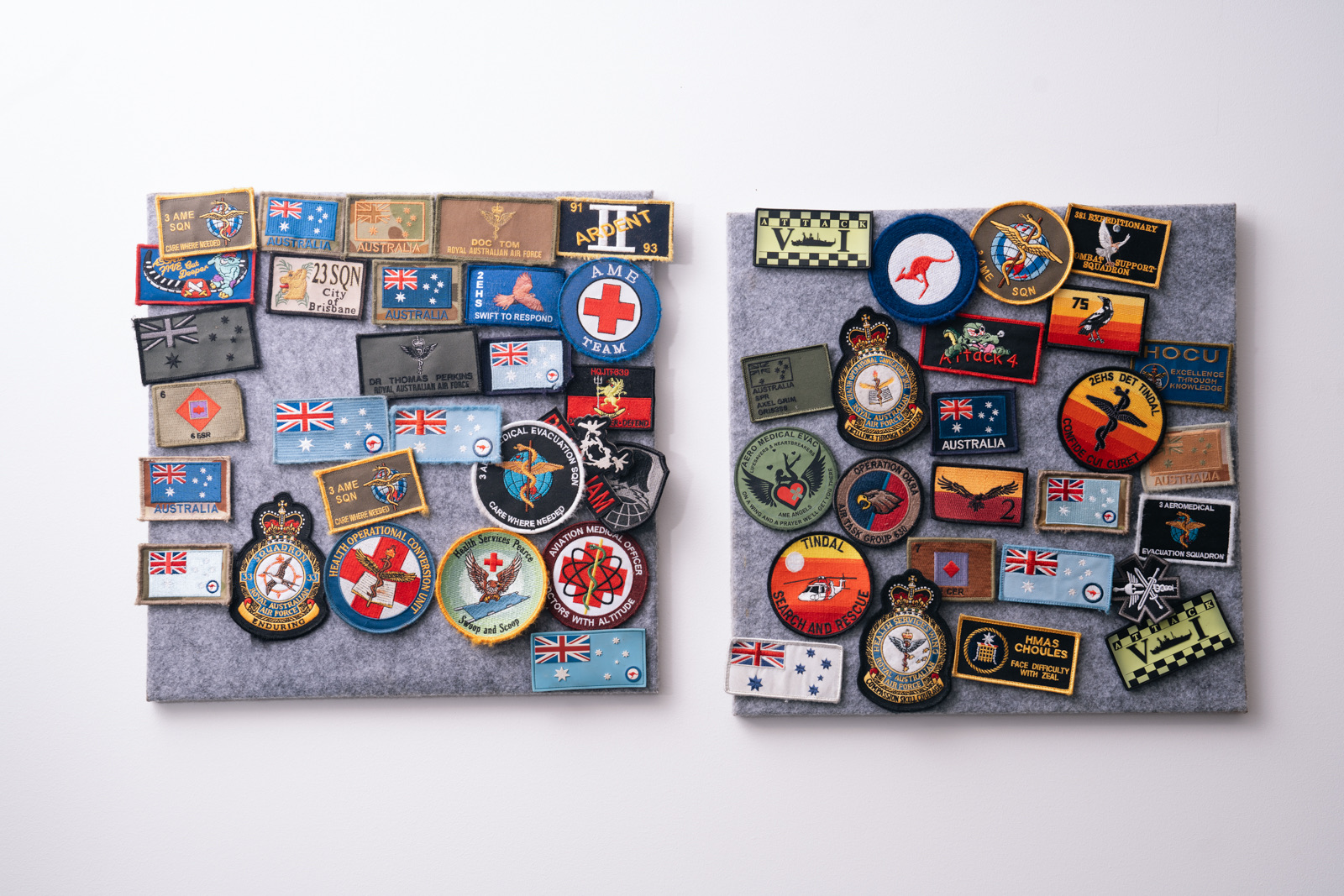
Dr Thomas Perkins is the founding doctor at the Veterans Health Centre in Ipswich, Queensland, and the leading expert in veterans’ medicolegal work in Australia. He has spent over 13 years working exclusively with current and former Australian Defence Force members — treating conditions, writing reports, and navigating the DVA system alongside them.
With 80,000+ DVA claims submitted and over 2,000 Permanent Impairment Assessments completed, Dr Perkins brings a depth of experience that simply cannot be replicated from a textbook. He understands the Statements of Principles, the GARP tables, the imaging that proves what a physical examination alone cannot — and the difference that a properly written report makes at every level, from initial liability through to the VRB.
Every chart review, every diagnostic assessment, and every impairment rating is personally overseen by Dr Perkins. If you’re looking for a doctor who knows veterans medicine inside and out, you’ve found the right clinic.
Contact us0429 146 039 reception@vhc.org.au
Book appointmentReady to appeal your class?
Start with a no obligation consult. We will tell you whether the evidence supports a higher class before you spend anything.