
DVA Diagnosis Form (D9287) — Download and How to Complete It
The Diagnosis Form is how a doctor tells DVA what you have been diagnosed with. It is form D9287, it is completed by a medical practitioner rather than by you, and it is one of the most common reasons a claim stalls — because a claim with no named diagnosis on the file cannot be accepted.
- D9287 Diagnosis Form (PDF, 135 KB):
dva.gov.au/sites/default/files/2026-04/d9287.pdf - DVA form page:
dva.gov.au/about-us/dva-forms/diagnosis-form - DVA: 1800 VETERAN (1800 838 372)
Current version April 2026. Always download from DVA so you get the latest.
On this page
What the D9287 is
The D9287 Diagnosis Form is a two-page DVA form on which a medical practitioner records a diagnosis for the purposes of a claim. DVA’s own instruction is blunt: “For many injuries and diseases, DVA requires diagnosis by a specialist including test or imaging reports. Please print this form and take it to a General Practitioner to complete.”
It exists because of a rule that catches a great many veterans out. DVA cannot accept liability for a condition that has not been diagnosed and named. Symptoms are not a condition. “Sore back for twenty years” is not claimable; lumbar spondylosis is. The Diagnosis Form is the mechanism for getting that name onto the file in a form a delegate can act on.
Who fills it in
A medical practitioner — in practice, your GP. Not you, and not your advocate.
You can download and print it, and you should, because handing it to your GP saves explaining what is needed. But every substantive field is the doctor’s: the diagnosis, the basis for it, the dates, the provider number and the signature.
What is on the form
Reading down the current version, it asks for:
- Patient details — surname, given names, date of birth.
- The medical diagnosis. The condition, named.
- The basis for the diagnosis — how the doctor arrived at it. Examination findings, imaging, pathology, specialist correspondence.
- A declaration about specialist reports — a tick box confirming the practitioner has sighted any specialist or test and imaging reports DVA requires in order to make the diagnosis.
- Other related diagnosed conditions that should be considered alongside the one diagnosed.
- Approximate date of onset of the injury or disease, based on the available notes.
- When the claimant first presented for that injury or disease.
- Practice details — address, telephone, and the practitioner’s stamp including provider number.
- The practitioner’s signature and date.
Two of those fields do more work than the rest, and they are covered next.
The specialist reports declaration
The tick box confirming specialist or imaging reports have been sighted is not a formality. For a large number of conditions DVA will not accept a GP’s diagnosis on its own — it wants the specialist report or the scan behind it.
Which conditions those are depends on the Statement of Principles for the condition and on DVA’s diagnostic requirements. Some conditions have a defined diagnostic threshold written into the SoP; others do not. If your GP ticks that box without the reports actually existing, the claim comes back.
Two date fields, two different questions. “Date of onset” and “when did the claimant first present” are not the same thing, and the difference matters enormously. Onset is when the condition was first present — not when it was first scanned, and not when someone first wrote it down. Getting onset wrong can defeat a SoP factor that is in fact satisfied. Why the imaging date is the wrong date.
Where it goes wrong
- A symptom in the diagnosis field. “Back pain”, “knee pain”, “anxiety” — these are not diagnoses and will not carry a claim.
- Onset recorded as the date of the scan. The single most common technical error, and it pushes the gap between service and onset out, sometimes fatally.
- The reports box ticked with no reports. Comes back, and costs months.
- One form for a claim with eight conditions. Each diagnosed condition needs its own diagnosis recorded. Most veterans have many more claimable conditions documented than they realise.
- No provider number or stamp. Bounced on administration alone.
What the form does not do
This is the part worth understanding before you rely on it.
The D9287 names the diagnosis. It does not connect that diagnosis to your service. It has no field for the Statement of Principles, no field for which factor is met, and no space for the service history and clinical timeline that a delegate needs in order to accept liability.
So the form is necessary and not sufficient. It gets a diagnosis onto the file. Whether DVA accepts the condition turns on a different question — whether the evidence shows a SoP factor is satisfied — and that argument has to be made somewhere.
That is what a Diagnostic Assessment is: the diagnosis, the ICD-10 code, the ADF and occupational history, the referenced clinical timeline, and each SoP factor argued to MET or NOT MET. You can read real ones — de-identified examples across hundreds of conditions — in the Claims Library.
If you are not sure which conditions you should be getting diagnosed in the first place, that is what a chart review answers: every page of your record read, and every claimable condition identified, before anyone fills in a form.
Common questions
Where do I download the DVA Diagnosis Form?
From DVA directly: the D9287 PDF, or via the DVA form page. The current version is dated April 2026.
Can I fill in the Diagnosis Form myself?
No. It must be completed by a medical practitioner. You can print it and take it to your GP.
Does my GP charge to complete it?
That is between you and your practice. Some bulk bill the consultation; some charge for paperwork completed outside a consultation. Ask when you book.
Do I need one form per condition?
Each condition needs its diagnosis recorded. A single form with one diagnosis does not cover the other seven conditions you are claiming.
Is the D9287 the same as a Diagnostic Assessment?
No. The D9287 records a diagnosis. A Diagnostic Assessment argues the condition against its Statement of Principles, with the history and evidence a delegate needs to accept liability.
My GP will not complete it. What now?
Some GPs are uncomfortable with DVA paperwork or unfamiliar with what is required. A practice that does this work daily will not be. We are a DVA GP clinic and this is routine here.
Talk to us
Call 0429 146 039 or email reception@vhc.org.au — Veterans Health Centre, Ipswich, Queensland. We are a veteran-focused general practice and DVA paperwork is ordinary work here.
Related pages
The D0904 referral voucher · How to submit a DVA claim · Uploading documents to MyService · SoP library · Claims Library · Appealing a DVA decision · DVA glossary
General information for Australian veterans, current as at 17 September 2026; not medical advice. The D9287 is published by the Department of Veterans’ Affairs — always download the current version from dva.gov.au, or call 1800 VETERAN (1800 838 372).
Dr Thomas Perkins
The expert in veterans’ medicolegal medicine — Expert DVA Doctor.


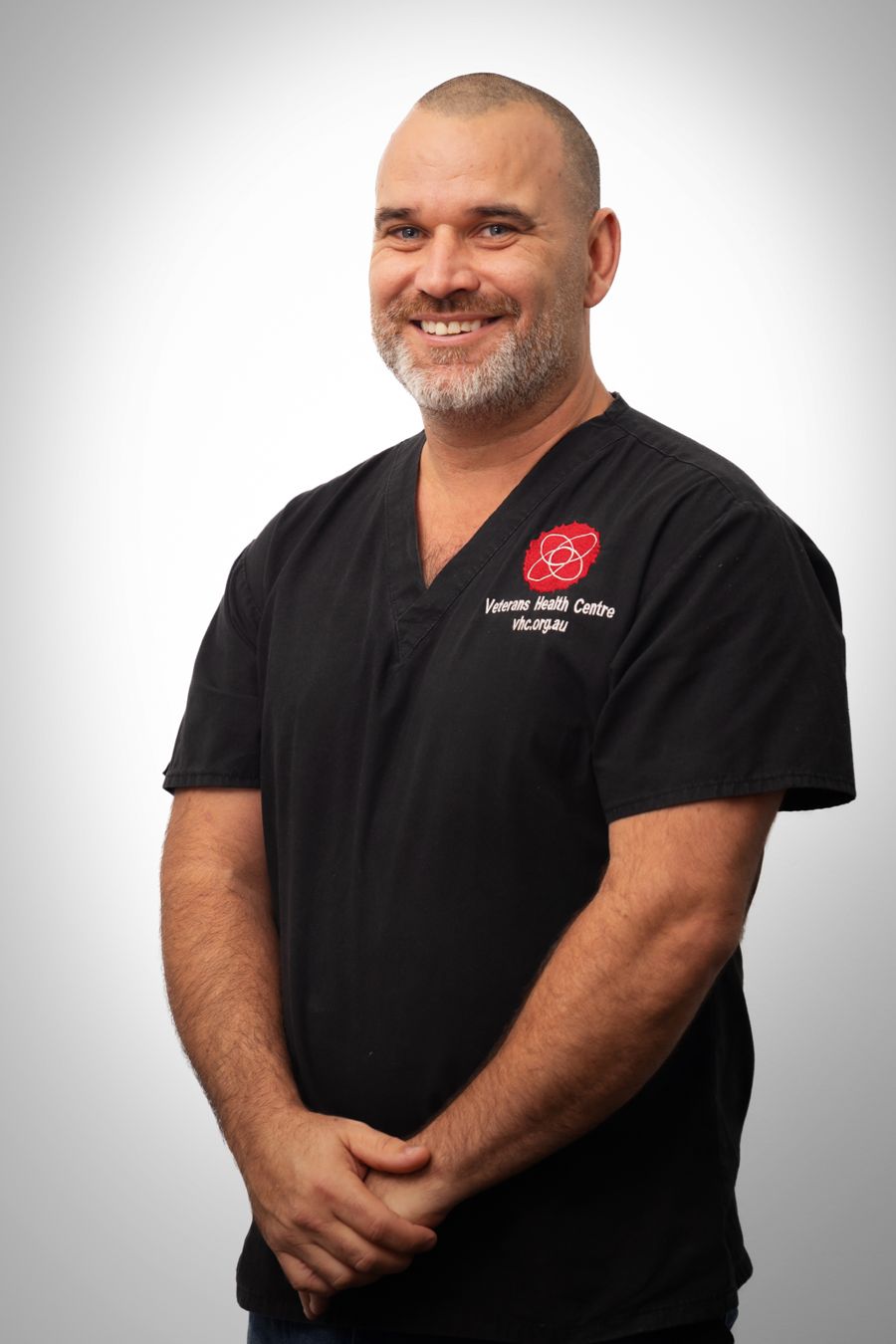
Dr Thomas Perkins is the founding doctor at the Veterans Health Centre in Ipswich, Queensland, and the leading expert in veterans’ medicolegal work in Australia. He has spent over 13 years working exclusively with current and former Australian Defence Force members — treating conditions, writing reports, and navigating the DVA system alongside them.
With 100,000+ DVA claims submitted and over 2,000 Permanent Impairment Assessments completed, Dr Perkins brings a depth of experience that simply cannot be replicated from a textbook. He understands the Statements of Principles, the GARP tables, the imaging that proves what a physical examination alone cannot — and the difference that a properly written report makes at every level, from initial liability through to the VRB.
Every chart review, every diagnostic assessment, and every impairment rating is personally overseen by Dr Perkins. If you’re looking for a doctor who knows veterans medicine inside and out, you’ve found the right clinic.
Contact us0429 146 039 reception@vhc.org.au
Book appointmentA diagnosis is the start, not the claim
The form names the condition. Something still has to argue it against the Statement of Principles. That is the document a DVA delegate actually decides on.