
BlogGARP series

GARP Chapter 4: Mental Health — The Only Chapter Where Ratings Are Added, Not Combined

PTSD, depression, anxiety and alcohol use disorder produce a single rating built from eight tables. Two of them carry 24 points each, and the second rates what other people see — which is why who comes with you matters.

Chapter 4 is where PTSD, depression, anxiety, alcohol use disorder and every other accepted psychiatric condition gets its number. It works differently from every other chapter in the Guide, in one crucial respect:

the ratings are added together, not combined.

Everywhere else, ratings pass through the Combined Values Chart, where each successive condition is worth progressively less. Not here. Chapter 4 says plainly that Chapter 18 is not to be applied — the five component ratings are simply summed. That is why mental health can produce large impairment figures from a single condition where a physical claim cannot.

This is part of our series working through the GARP. Start with what the GARP is, the chapter map, and Chapters 1, 2 and 3.

One rating, however many diagnoses

The first thing to understand is that Chapter 4 produces one final rating for all psychiatric conditions together. The Guide is explicit: "Only one final rating is to be determined using this Chapter for any psychiatric condition or combination of psychiatric conditions."

PTSD, major depression and an anxiety disorder do not produce three ratings. They produce one. Where some psychiatric conditions are accepted and others are not, Chapter 19 is applied to separate out the accepted share.

This cuts both ways. It means a second mental health diagnosis adds nothing by itself. It also means the assessment should be capturing the total psychiatric picture, not one label's worth of it.

The eight tables

The condition is rated against eight parameters, each its own table:

  1. 4.1 Subjective distress
  2. 4.2 Manifest distress
  3. 4.3 Functional effects
  4. 4.4 Occupation
  5. 4.5 Domestic situation
  6. 4.6 Social interaction
  7. 4.7 Leisure activities
  8. 4.8 Current therapy

Then the arithmetic, which is the part worth memorising:

Rate all eight. Take Table 4.1 in full. Take Table 4.2 in full. From Tables 4.3 to 4.8, take only the three highest. Add those five numbers together.

Tables 4.1 and 4.2 run to 24 points each. Tables 4.3 to 4.8 run to 8 points each. So the theoretical maximum is 24 + 24 + 8 + 8 + 8 = 72 points from psychiatric impairment alone — before any physical condition is combined in.

The Guide explains why only three of the six are counted: the criteria do not apply equally to everyone. Table 4.5 depends on your domestic arrangements; Table 4.8 depends on whether you are in treatment. Taking the best three "ensures equity in assessment across a broad range of persons".

Tables 4.1 and 4.2 carry most of the weight

Together they account for up to 48 of the 72 available points, which makes them by far the most important part of the assessment.

Table 4.1 — subjective distress is what you experience. The Guide describes it as "the equivalent of the symptom complex experienced by a person with a physical condition", and names the examples: anxiety, fear or depression, flashbacks, intrusive thoughts, loss of concentration, nightmares, hallucinations.

The scale turns almost entirely on frequency and on whether you can distract yourself:

  • 2 — occasional symptoms, minor distress, easily distracted from on most occasions.
  • 3 — recurring symptoms, mild distress, can distract on most occasions.
  • 6 — frequent symptoms, moderate distress, sometimes unable to distract.
  • 10 — very frequent symptoms, moderate distress, often unable to distract.
  • 15 — persistent symptoms, considerable distress, relief difficult even with a high level of support and reassurance.
  • 20 — persistent symptoms, profound distress, can rarely distract even with high support.
  • 24 — continuous symptoms, overwhelming distress, cannot distract at all even with high support.

Table 4.2 — manifest distress is what other people see. The Guide calls it "the equivalent of the signs observed in a physical condition", and its examples are concrete: preoccupation, manic behaviour, inappropriate actions, restless pacing, nervous sweating, tremor, bursts of anger, pressured speech, perseveration, inability to follow a conversation, vocalisations during nightmares, compulsive or excessive drinking, and compulsive gambling.

Its scale runs on who notices:

  • 2 — disturbances of behaviour, emotion or thinking occasionally noticeable.
  • 3 — sometimes apparent to astute observers or people who know you.
  • 6 — apparent to astute observers or people who know you.
  • 10 — obvious to casual observers and people unfamiliar with you.
  • 15 — obvious continual distress.
  • 20 — distress that draws attention to the person.
  • 24 — all-pervasive distress.

Here is the practical problem. Manifest distress is by definition what others observe — and a veteran attending a single appointment, holding it together for an hour, presents very little of it. This is the table where a partner's or family member's account is worth more than anything the veteran can say about themselves, and it is worth up to 24 points.

Tables 4.3 to 4.8 — best three of six

4.3 Functional effects — ability to function in a non-specific environment: personal hygiene, preparing and eating food, using appliances, finding your way, getting home safely from the shops, avoiding common dangers like crossing the road, remembering where ordinary objects are and how public transport works. From 1 (minor interference in some everyday situations) to 8 (profound impairment, virtually all purposeful activity abandoned).

4.4 Occupation — concentration on a task, working with others, taking instructions from a supervisor, interacting with clients. 1 for occasional days off; 2 for short absences of more than a day; 3 for long absences of weeks or months; 5 for major difficulties manifested by job modification or restricted career opportunities; 6 for marked loss of time or productivity leading to loss of original vocation; 8 for cannot work. Note the Guide's warning: these criteria are different from the eligibility tests under sections 23, 24 and 25 of the Act, and only impairment from accepted psychiatric conditions counts.

4.5 Domestic situation — 1 occasional friction with family; 2 frequent discord; 3 frequent conflict; 5 continual conflict; 6 family functioning deteriorating with estrangement or divorce a likely consequence; 8 virtually non-existent family life.

4.6 Social interaction — relationships with friends outside close family and casual social interaction. 1 occasional friction with colleagues and friends, through 3 significant reduction, 5 substantial reduction, 6 general social withdrawal, to 8 negligible social contact.

4.7 Leisure activities — the ability to enjoy things you used to. The Guide is thoughtful here: decreased concentration, decreased ability to follow a complex activity (a crossword, cards, sport, the plot of a film or book), loss of interest, sometimes inability to remember the rules of a game — and it notes that inability to concentrate or remember "may lead to embarrassment with avoidance of the activity". 1 for some loss of interest, up to 8 for virtually all recreational activities abandoned.

4.8 Current therapy — and this is the one veterans routinely under-report, because they do not think of it as impairment. 1 where medical or supportive treatment may be required or would be recognised as useful; 2 where psychiatric treatment has been tried or recommended, or occasional supportive therapy given, or a friend or member of the clergy has acted in a supportive role or sounding board; 3 where medication or psychotherapy has been used or deemed necessary, or there are periods of regular supportive therapy; 5 for intensive specialist outpatient treatment including medication or short inpatient stays; 6 for longer inpatient care, long-term psychotropic regimes or ECT; 8 for continuous treatment with long periods in hospital and marked social support.

Note how broadly "therapy" is defined. It includes assistance from a spouse, close relatives, friends or clergy. A veteran being held together by their partner is describing something the table rates.

The rules around the edges

Only the psychiatric condition counts. The Guide gives the caution directly: inability to work, reduced recreation and increased family conflict "may all be present but not necessarily be consequences of the psychiatric condition". If your marriage is strained for reasons unconnected to your PTSD, that is not rated here.

Somatic effects are rated separately. Headache, dyspepsia and psychogenic impotence arising from a psychiatric condition get their own ratings under the relevant system-specific tables — but it must be clearly established that they are part of the psychiatric condition and not a separate disease.

Intermittent conditions get a second look. Where symptoms are intermittent, Chapter 15 is applied and its rating compared with the Chapter 4 rating, with the higher taken.

Stress as an aetiological agent is not rated here. Conditions in which stress is implicated as a cause are "separate entitlement issues".

No age adjustment applies to any table in this chapter.

Substance abuse — the timing rule that catches people

Substance abuse (which includes substance dependence) is assessed under Chapter 4, including where it carries a different psychiatric diagnostic label. But how it is treated depends on a timing question that is easy to get wrong:

  • If substance abuse is an accepted condition in its own right, it is assessed on Tables 4.1 to 4.8.
  • If it is not separately accepted, but you have an accepted psychiatric condition and substance abuse is a clinical feature of it, it can be assessed as part of that condition only if it was present and part of the condition when the condition was originally accepted.
  • If it developed later — present during the assessment period but not when the condition was accepted — it can only be assessed if it is claimed and accepted as part of the accepted condition.

Alcohol use disorder that emerged years after PTSD was accepted therefore needs to be claimed. Under presumptive liability, alcohol use disorder is attributable where accepted substance use disorder or depressive disorder was present at onset — and depressive disorder is attributable where accepted alcohol use disorder was present. Those pathways are worth knowing before an assessment, not after.

What this means in practice

Bring someone who sees you every day. Table 4.2 is worth up to 24 points and rates what others observe. A partner who can describe the nightmares, the pacing, the anger and what you are like on a bad day is providing evidence you cannot provide about yourself.

Answer the distraction question honestly. Table 4.1's whole scale turns on frequency and whether you can pull yourself out of it. "Sometimes unable" is 6; "often unable" is 10; "rarely able even with support" is 20. That is a 14-point spread on one question.

Do not minimise. Veterans consistently understate psychiatric symptoms — through habit, through training, and because a single appointment is a poor sample of a bad month. The assessment can only rate what is described.

Count the support you are already getting. Table 4.8 rates therapy broadly, including informal support from a spouse or a friend. If you have never had formal treatment but your family is carrying you, say so.

Remember there is only one rating. Give the whole picture across all your psychiatric conditions in the one assessment, because there will not be a second one for the second diagnosis.

Mention the somatic symptoms. Headaches, gut symptoms and sexual dysfunction arising from the psychiatric condition are rated separately under their own chapters, and are frequently left unmentioned.

Frequently asked questions

Do PTSD and depression get separate ratings?

No. Chapter 4 produces one final rating for all psychiatric conditions together, however many diagnoses you carry.

What is the maximum psychiatric impairment rating?

72 points — 24 from Table 4.1, 24 from Table 4.2, and the three highest of Tables 4.3 to 4.8 at up to 8 each. Physical conditions then combine with that figure through Chapter 18.

Are all eight tables counted?

No. Tables 4.1 and 4.2 always count in full. Only the three highest of Tables 4.3 to 4.8 are counted, because those criteria apply unevenly across different people's circumstances.

Are the ratings added or combined?

Added. The Guide expressly states that Chapter 18 (the Combined Values Chart) is not to be applied in this process. This is unique to Chapter 4.

What is the difference between subjective and manifest distress?

Subjective distress is what you experience — the Guide likens it to symptoms. Manifest distress is what others observe — the equivalent of signs. They are rated separately and both count in full.

Does my alcohol use get counted?

It depends on timing. If it is separately accepted, yes. If it is a clinical feature of an accepted psychiatric condition, only if it was present and part of that condition when it was originally accepted. If it developed later, it has to be claimed and accepted.

Does my partner's support count as therapy?

Yes. Table 4.8 defines therapy to include assistance given by a spouse, close relatives, friends or clergy, as well as formal medical and psychiatric treatment.

Does age adjustment apply to mental health?

No. None of the tables in Chapter 4 permit age adjustment.

Next in this series

Chapter 5: neurological impairment — brain injury, nerve damage and sensory loss.

Talk to us

If you have a permanent impairment assessment coming up and want it done by a doctor who applies this Guide every week, call 0429 146 039 or email reception@vhc.org.au.

Related reading

What is the GARP? · The chapter map · Permanent Impairment Assessments · PI assessment explained · Secondary conditions A–Z · SoP library · Chart reviews · DVA claims

This article is general information for Australian veterans and is not legal advice. It summarises Chapter 4 of the Guide to Determining Impairment and Compensation 2026 (F2026L00595), which commenced 1 July 2026. The full instrument is published on the Federal Register of Legislation. Confirm your own position with DVA on 1800 VETERAN (1800 838 372).
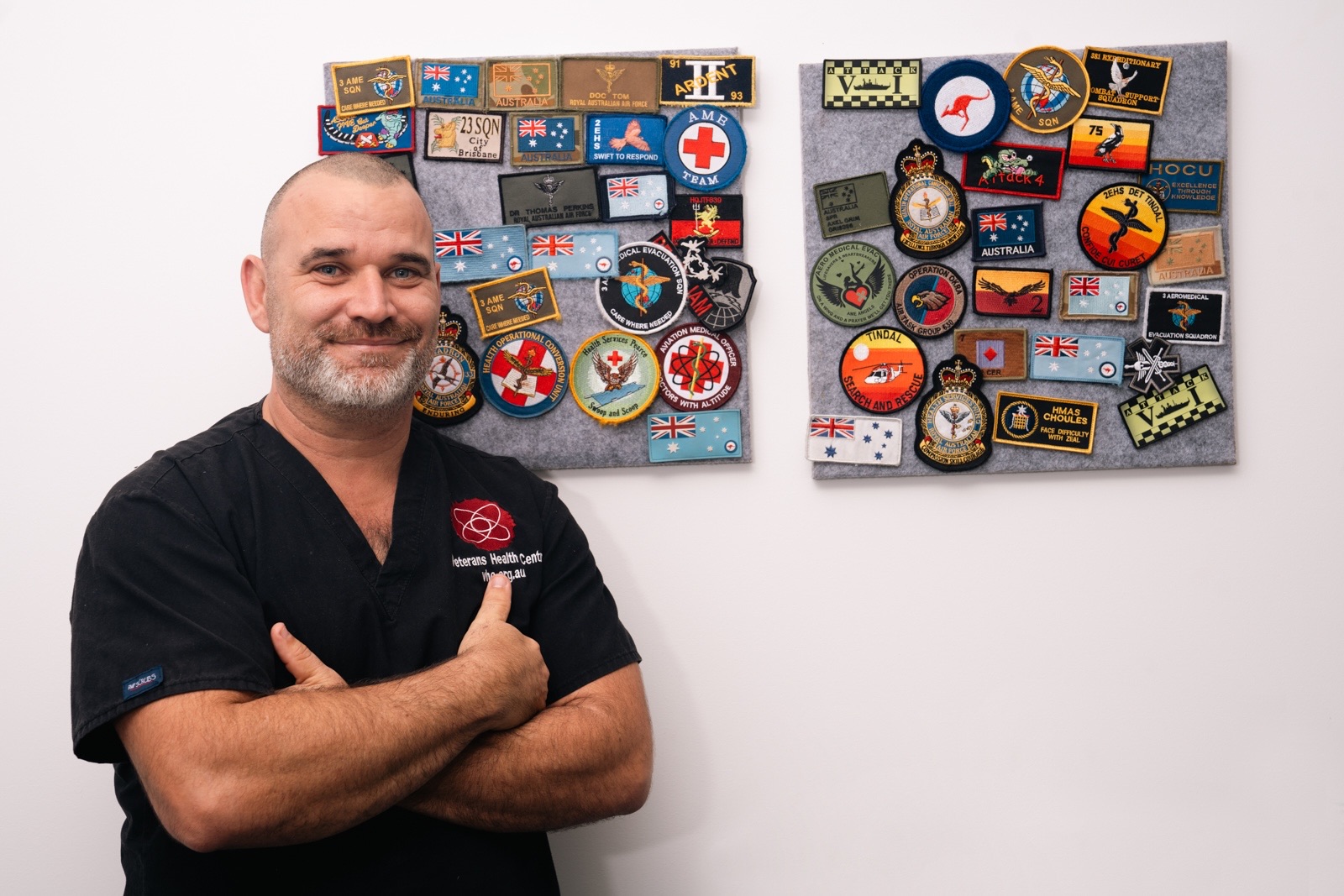
Your doctor

Dr Thomas Perkins

The expert in veterans’ medicolegal medicine — Expert DVA Doctor.

Dr Thomas Perkins is the founding doctor at the Veterans Health Centre in Ipswich, Queensland, and the leading expert in veterans’ medicolegal work in Australia. He has spent over 13 years working exclusively with current and former Australian Defence Force members — treating conditions, writing reports, and navigating the DVA system alongside them.

With 100,000+ DVA claims submitted and over 2,000 Permanent Impairment Assessments completed, Dr Perkins brings a depth of experience that simply cannot be replicated from a textbook. He understands the Statements of Principles, the GARP tables, the imaging that proves what a physical examination alone cannot — and the difference that a properly written report makes at every level, from initial liability through to the VRB.

Every chart review, every diagnostic assessment, and every impairment rating is personally overseen by Dr Perkins. If you’re looking for a doctor who knows veterans medicine inside and out, you’ve found the right clinic.

Contact us0429 146 039 reception@vhc.org.au

Book appointment