
Blog › Permanent impairment
Permanent Impairment Assessments: How DVA Turns Your Injury Into a Payment
Once DVA accepts liability, compensation is decided by the impairment rating. Here is how GARP works, what permanence and stability mean, and why the assessment itself is worth getting right.
Getting liability accepted is the first half of a DVA claim. The second half — the half that decides what you are actually paid — is the Permanent Impairment Assessment.
What is being measured
A permanent impairment assessment does not ask whether your condition was caused by service; that has already been decided. It asks how much function you have permanently lost as a result.
Impairment is rated using the Guide to the Assessment of Rates of Veterans' Pensions — GARP. Each body system has its own tables, and each table converts measured clinical findings into impairment points. Points across all accepted conditions are combined, a lifestyle rating is added, and the result determines your compensation.
Permanence, stability and adequate treatment
Three concepts decide whether a condition can be rated at all, and they are where inexperienced assessors come unstuck.
- Permanent — the condition is unlikely to resolve.
- Stable — it is unlikely to change materially with further treatment.
- Adequate treatment — reasonable treatment has been undertaken, so what remains is the true residual loss.
Get these wrong and the assessment is either deferred, under-rated, or sent back by DVA's medical adviser. Get them right and the rating reflects reality.
Why the examination matters
GARP tables are driven by measurements: range of motion in degrees, sensation mapped by dermatome, grip, gait, function. Those numbers cannot be estimated from a questionnaire, and they cannot be inferred from a file.
Every Permanent Impairment Assessment we complete is done face to face at the Ipswich clinic — psychiatric assessments by telehealth where appropriate — by the doctor who wrote the diagnostic evidence and knows the record.
The report that defends the rating
Most providers return the DVA forms with the boxes filled and little else. We write a standalone report to accompany the request: the history of each condition, the timeline of how it progressed, the examination findings, and the working behind every impairment point and lifestyle rating.
The purpose is defensive. When a DVA medical adviser reviews the assessment, the reasoning is already on the page, referenced to the record and the table applied. There is nothing left to query, which is why properly written ratings tend to survive review intact.
What gets missed
In our experience the most common losses in an impairment assessment are not dramatic. They are:
- Accepted conditions simply left off the assessment.
- Lifestyle effects not documented, so the lifestyle rating comes in low.
- Apportionment between service and non-service causes applied without reasoning.
- Psychiatric impairment rated by someone unfamiliar with how it is scored.
- Conditions rated before they were stable, locking in a lower number.
Frequently asked questions
When can I have a permanent impairment assessment?
Once DVA has accepted liability for at least one condition and that condition is permanent and stable. If you are still improving with treatment, waiting is usually the better call.
What does it cost?
A Permanent Impairment Assessment at VHC is $1,500 + GST, fixed, covering the examination, the ratings, completion of the DVA forms and any response to a medical adviser query afterwards.
Can I be reassessed if my condition worsens?
Yes. Impairment can be reassessed when an accepted condition deteriorates, and a reassessment is decided on the same GARP framework.
Does a higher rating affect my other payments?
It can interact with other entitlements, which is worth understanding before you lodge. We will talk you through the interaction that applies to your circumstances.
Talk to us
If you want to know where you stand before spending anything, call 0429 146 039 or email reception@vhc.org.au for a no-obligation consult with the Veterans Health Centre in Ipswich, Queensland.
This article is general information for Australian veterans and is not legal or financial advice. Your entitlements depend on your service, your conditions and the evidence available.
Read next
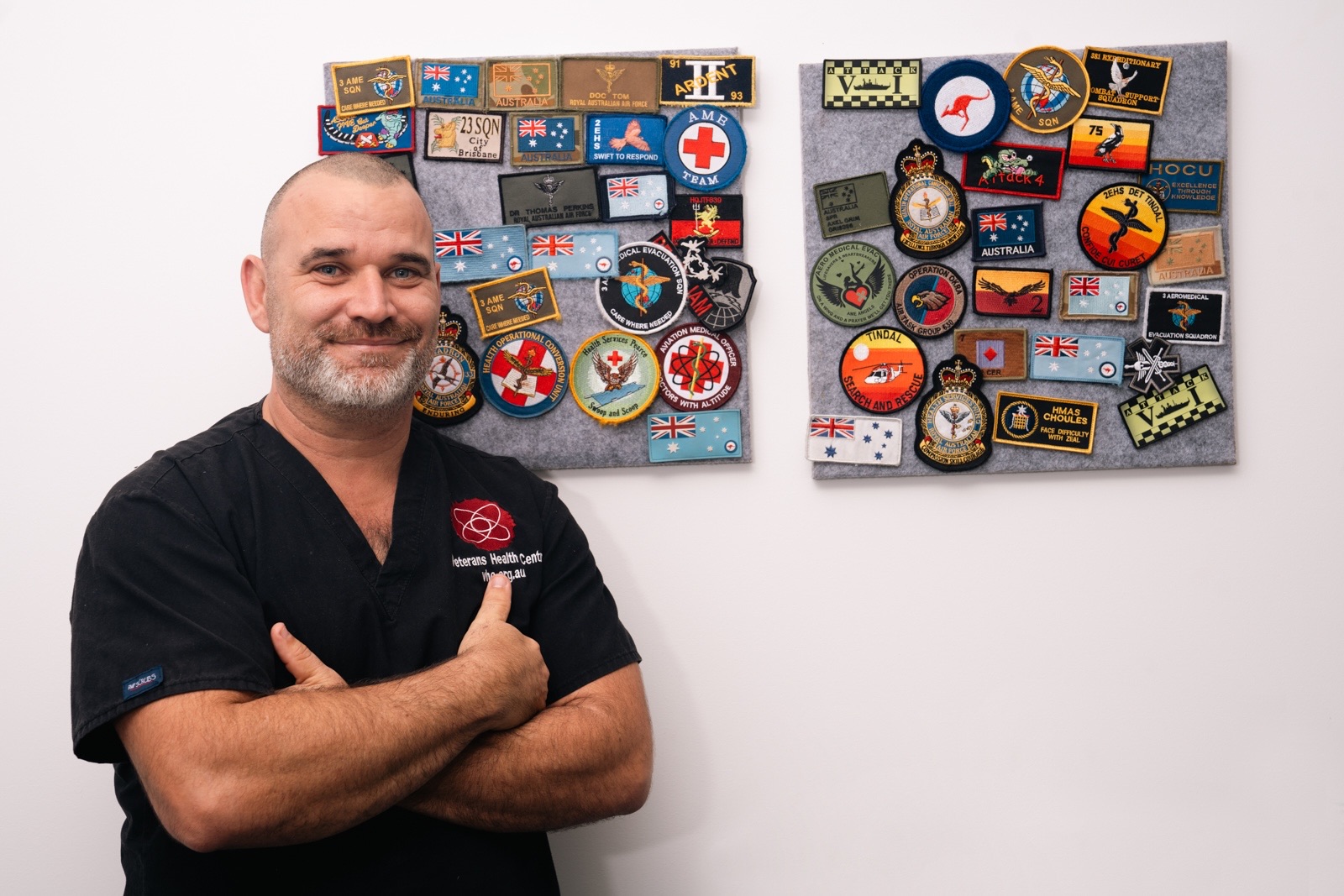
Reviewed by Dr Thomas Perkins
Founding doctor, Veterans Health Centre · former RAAF aviation medical officer · 13 years working exclusively with ADF members and veterans. Full profile →