
Blog › CSC
Initiating Your Own Medical Discharge from the ADF
Most members think a medical discharge is something done to them — a board somewhere reaches a decision and the decision arrives. It can also be something you start. And the two systems that decide what happens afterwards, DVA and CSC, are asking completely different questions about the same injuries.
This is a process built out of acronyms, and that is part of why members drift through it without engaging. What follows is the sequence in plain language: how it starts, what the board actually decides, which documents carry it, and the one appointment that determines what evidence you leave the ADF holding.
It does not have to start with someone else
The usual account is that a referral to a Military Employment Classification Review Board (MECRB) comes from Career Management, from your unit, or from a medical officer, where an injury or illness is affecting your employability or deployability. All of that is true.
What gets left out is that if you already know your condition is not compatible with continuing to serve, you do not have to wait to be noticed. The conversation starts at your health centre, with your medical officer, because it is the medical officer who initiates the classification review. Members routinely spend another two years being downgraded, re-downgraded and quietly worked around before anyone starts the process formally — and every one of those years is spent accumulating damage rather than resolving it.
MEC, and the comprehensive review
Your Medical Employment Classification is the statement of what you are medically able to do. Where a condition means you cannot deploy or be employed without restrictions in the long term — generally understood as beyond twelve months — a Comprehensive Medical Employment Classification Review (CMECR) is required.
A CMECR is not decided by your treating MO alone. It is reviewed by Defence medical officers at the MEC Advisory and Review Service (MECARS) in Canberra, and confirmed by the relevant single-Service board. That is the step that turns a local clinical picture into a formal, reviewable classification.
What the board actually decides
The most important thing to understand about a MECRB referral is that it is not a separation process. The board makes an individualised assessment aimed at retaining people within their medical and workplace capacity. The possible outcomes include:
- a MEC upgrade
- extended rehabilitation
- a posting to different duties
- a trade or Service transfer
- employment at Service discretion
- employment restrictions
- or medical separation
Members avoid initiating the process because they assume referral equals discharge. It does not, and the fear costs people the chance to be retained on terms that actually work.
The process takes approximately twelve weeks, and can be completed sooner depending on priority and complexity.
The three documents, and the fourteen days
Once the process starts, three documents are due within 14 days. If they are not submitted, the board proceeds on whatever information it happens to have. These are the Army form numbers; the other Services use their equivalents.
PM609 — consent to release medical information
Your consent for your medical information to go to the board. Consider it carefully rather than reflexively: without it, the board may not be able to make a fully informed decision. A board deciding your future on incomplete medical information is rarely deciding in your favour.
AD523 — Workplace Capacity Report
Completed by your chain of command, commenting on your ability to perform your current duties from the organisation's perspective. You do not write this one, but you are entitled to know what it says about you.
AD524 — Member's Health Statement
This is yours, and it is the one members waste. It summarises your ability to complete your duties and — critically — the outcome you want from the board. Defence explicitly encourages members to provide input through it, and to update it whenever personal or medical circumstances change.
Write it properly. Not stoically. The instinct that got you through your career — minimise, push on, do not be the one complaining — is exactly the instinct that produces a health statement understating your condition, filed with a board that can only decide on what is in front of it.
If you disagree with the determination, you can represent it. Where the determination is to medically separate you, you may submit a Statement of Reasons.
The separation health examination
Whether you separate medically or otherwise, you will have a transition or separation health examination. Defence guidance is that it should be undertaken around six months before your separation date, and appointments can generally be booked three to six months out through your local Garrison Health Centre.
At that appointment a Defence medical officer completes the examination and the DM042, which goes to the Commonwealth Superannuation Corporation as part of the invalidity classification process. You will also nominate a civilian GP, a dentist and any specialists you need, and complete a mental health questionnaire that may result in a mental health referral.
Treat this as the most consequential appointment of your career. It is the last time the ADF documents your health, and both DVA and CSC will read what comes out of it for the rest of your life. Every condition you do not raise becomes a condition with no service-era documentation. The knee you have managed for six years, the hearing you stopped mentioning, the sleep that has not been right since deployment — if it is not in that examination, you will spend years reconstructing it from indirect evidence later.
Ask for your medical and dental records at the same time. You are entitled to them, and having them in hand from day one saves months on every claim you ever lodge.
DVA and CSC: same injuries, different questions
This is where most of the confusion in the whole process lives, and it is worth being precise about.
DVA asks about causation
Did your service cause or aggravate this condition? The test is a Statement of Principles: a legislative instrument listing the only factors capable of connecting that condition to service. Your capacity for work is irrelevant to whether liability is accepted.
CSC asks about capacity
How much has this reduced your ability to earn a civilian living? CSC administers your superannuation scheme, and for invalidity purposes it does not matter whether service caused the condition — only that it was present and limiting at the relevant time.
Three practical consequences follow.
A DVA acceptance does not set your CSC class, and a CSC class does not prove a DVA claim. They are separate decisions on separate tests, and each needs evidence written for it. A report drafted to satisfy a Statement of Principles frequently says nothing useful about civilian work capacity, and vice versa.
Receiving one does not disqualify you from the other. An invalidity benefit from CSC does not prevent a DVA compensation claim, and DVA compensation does not prevent a CSC invalidity benefit.
The evidence overlaps even though the tests do not. A complete medical record — every condition named, dated and described in terms of function — feeds both. That is why we build a chart review once and use it for everything downstream.
If you have already separated without one
Plenty of members leave voluntarily or administratively while carrying conditions that would have supported a medical discharge, and only work out later what that cost them. That situation has a pathway of its own: a retrospective medical discharge application asks CSC to look back at the day you separated and decide whether, on the medical facts as they then stood, you should have been discharged medically instead.
And if you were medically discharged but placed in a class that does not reflect your actual incapacity, that classification can be reconsidered — see CSC invalidity class appeals.
What to do, in order
- Start the conversation with your MO. If your condition is not compatible with ongoing service, initiating the review yourself is better than another two years of being worked around.
- Write the AD524 as though it decides your future, because it contributes to a decision that does. State the restrictions honestly and state the outcome you want.
- Do not withhold consent reflexively. A board deciding on incomplete information is not deciding in your favour.
- Book the separation health examination early and go in prepared. Take a written list of every condition, including the ones you have normalised.
- Request your full medical and dental records. Do it before you leave.
- Lodge your DVA claims before you separate. There is nothing to gain by waiting, and processing takes months.
- Understand which system you are talking to at any given moment. DVA wants causation. CSC wants capacity. Answering the wrong question is the most common reason good claims fail.
Frequently asked questions
Can I ask to be medically discharged?
You cannot demand a particular outcome, but you can raise it with your medical officer, who initiates the classification review. The board then considers a range of outcomes, of which separation is one.
Does a MECRB referral mean I am being discharged?
No. The board seeks to retain people within their medical and workplace capacity, and outcomes include MEC upgrade, rehabilitation, posting, trade or Service transfer, employment at Service discretion, and employment restrictions.
How long does the MECRB process take?
Approximately twelve weeks, though it can be quicker depending on priority and complexity.
What happens if I do not submit my documents?
The board proceeds on the information available at the time. That is rarely to your advantage.
What is the DM042 for?
It is completed by a Defence medical officer at your transition health examination and used by CSC as part of the invalidity classification process.
Can I disagree with the board's determination?
Yes. You can represent the determination, and where the determination is to medically separate you, you may submit a Statement of Reasons.
Do I need to choose between DVA and CSC?
No. They are separate systems with separate tests, and receiving a benefit from one does not prevent a claim against the other.
Talk to us
Whether you are heading into a classification review, preparing for a separation health examination, or working out what you should have claimed years ago, call 0429 146 039 or email reception@vhc.org.au for a no-obligation consult with the Veterans Health Centre in Ipswich, Queensland.
This article is general information for Australian veterans and serving members and is not legal, financial or medical advice. Form numbers cited are Army; other Services use their equivalents, and Defence processes change — confirm the current requirements with your health centre or chain of command. Current as at September 2026.
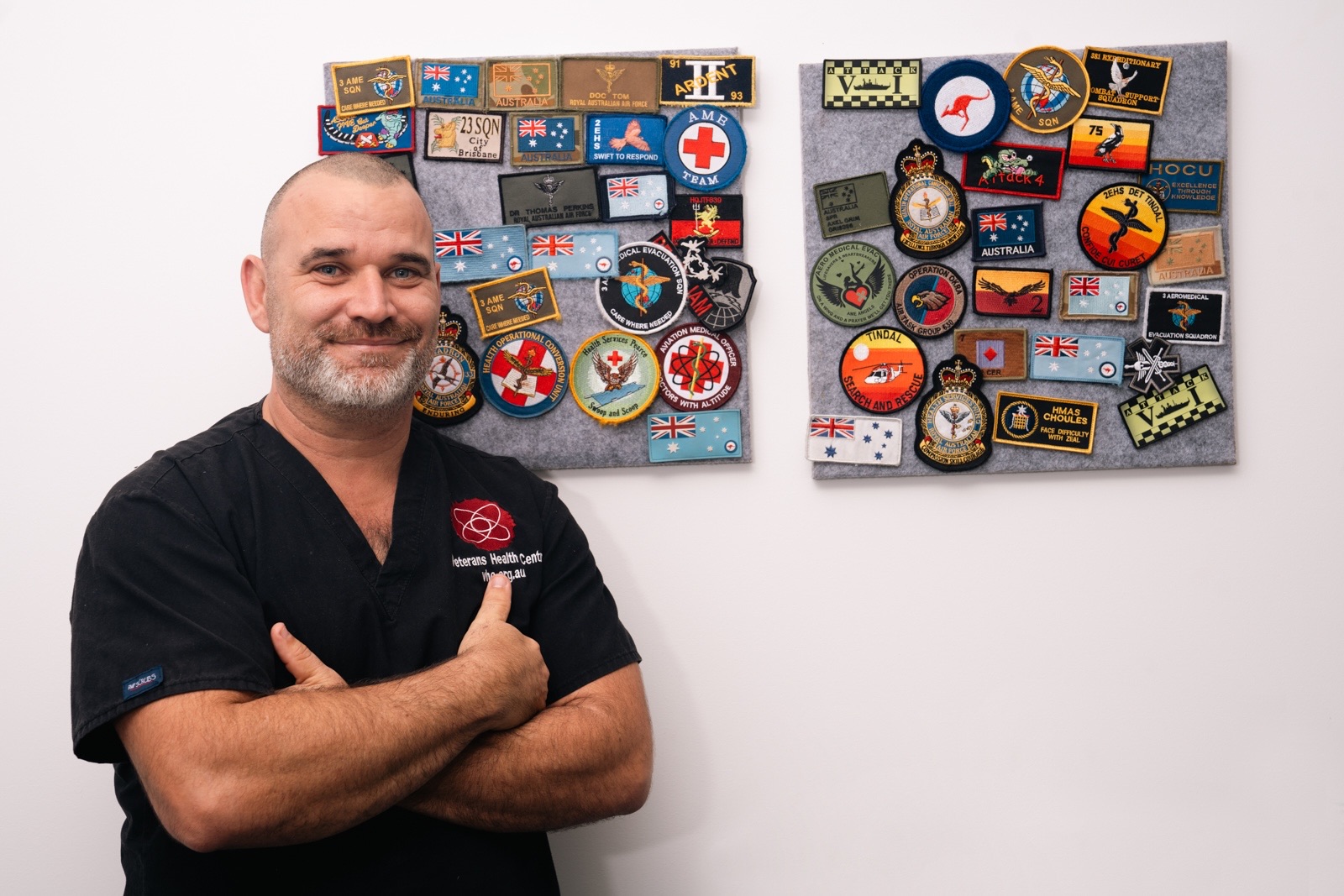
Reviewed by Dr Thomas Perkins
Founding doctor, Veterans Health Centre · former RAAF aviation medical officer · 13 years working exclusively with ADF members and veterans. Full profile →