
Blog › DVA policy
The Royal Commission into Defence and Veteran Suicide: What It Was, What It Found, and What It Recommended
Three years, 122 recommendations, seven volumes and a warning that there would not be another inquiry like it in our lifetime. Here is what the Royal Commission actually said — and what has happened since.
On 9 September 2024, three Commissioners handed the Governor-General a seven-volume report and closed the largest inquiry ever conducted into why Australian service members and veterans take their own lives. It had run for more than three years. It had compelled over 900 productions of documents, received more than 230,000 documents, heard from hundreds of witnesses across ten public hearing blocks, and sat privately with hundreds of individuals who had lost someone or had come close to being lost themselves.
Two years on, most veterans know the Royal Commission happened. Far fewer know what it found, and fewer still know which of its 122 recommendations are now law, which are in progress, and which are sitting on a shelf. This is a plain-language account of all three.
What the Royal Commission was
The Royal Commission into Defence and Veteran Suicide was established by Letters Patent on 8 July 2021, after years of campaigning by bereaved families — most publicly by Julie-Ann Finney, whose son David, a Navy veteran, died by suicide in 2019.
Its three Commissioners were Nick Kaldas APM (Chair), a former Deputy Commissioner of the NSW Police Force; the Hon James Douglas KC, a former judge of the Supreme Court of Queensland; and Dr Peggy Brown AO, a psychiatrist and former head of the National Mental Health Commission. They were supported by two Assistant Commissioners, Bob Atkinson AO PSM and Dr Susan Young.
The terms of reference were deliberately systemic. The Commission was not asked to investigate individual deaths as a coroner would. It was asked to find the patterns — the cultural, structural and systemic issues inside Defence, the Department of Veterans' Affairs and government itself that were producing the same outcome over and over again.
An Interim Report was handed down on 11 August 2022 with 13 urgent recommendations. The Commission's public hearings closed on 28 August 2024, and the Final Report was tabled in Parliament on 9 September 2024.
The finding that framed everything else
The number most often quoted from the Final Report is this: on average, three serving or ex-serving Defence members die by suicide every fortnight in Australia. Not every year. Every fortnight.
But the finding that most shaped the Commission's thinking was about the response, not the problem. In the Interim Report, the Commissioners recorded that they had identified more than 50 previous reports and inquiries since 2000 into matters relevant to veteran suicide, producing more than 750 recommendations — a figure they later revised upward to around 57 inquiries and almost 770 recommendations. Their assessment of what had come of them was blunt: they had been "dismayed to come to understand the limited ways that Australian Governments have responded to these previous inquiries and reports", and despite all of it, "there has been little to no change in the veteran suicide rate."
That is the sentence that explains the shape of the Final Report. The Commissioners were not writing for a government that lacked advice. They were writing for a system that had received a great deal of advice and had absorbed almost none of it. It is also why they wrote, in a public statement, a line worth sitting with: "We know there will not be another Royal Commission into this problem in our lifetime."
What the Interim Report demanded first
The Interim Report dealt with what could not wait. Two of its thirteen recommendations changed the landscape veterans are living in today.
Recommendation 1 — simplify and harmonise the legislation. The Commission found that Australia's veteran compensation and rehabilitation system was "so complicated that it adversely affects the mental health of some veterans" and could itself contribute to suicidality. Three overlapping Acts — the VEA, the DRCA and the MRCA — meant that two veterans with identical injuries could receive entirely different treatment depending on when and where they served. The Commission set hard deadlines for reform.
Recommendation 2 — eliminate the claims backlog. As at 31 May 2022, DVA had 41,799 claims sitting in a backlog, waiting merely to be allocated to a decision-maker. Veterans were waiting more than 300 days for decisions. The Commission gave a deadline of 31 March 2024 and told the Government to resource DVA to meet it — and, pointedly, that speed must not come at the cost of decision quality. Related recommendations removed the Average Staffing Level cap that had been limiting how many staff DVA could employ.
The 122 recommendations of the Final Report
The Final Report's recommendations run across seven volumes. The full list is published in Volume 1. Grouped by theme, this is what they cover.
Defence culture, leadership and service life (Recommendations 2–13)
Better support for recruits during initial training, career management and the posting cycle, proper decompression and reintegration after high-risk experiences, fairer medical employment classification and more roles for members who cannot deploy. Critically, the Commission recommended that ADF leaders be assessed on upward feedback and on performance against culture, health and wellbeing targets, and that emotional intelligence and wellbeing performance be weighed in promotion decisions. Recommendation 13 asked for new doctrine recognising that operational readiness depends on a healthy workforce — a direct challenge to the idea that welfare and capability pull in opposite directions.
Military sexual violence and unacceptable behaviour (Recommendations 14–37)
This is the sharpest section of the report. It recommended clarifying definitions and processes for sexual offences, strengthening workplace protections during investigations, protecting victims from career disadvantage, amending sentencing legislation, a presumption of discharge for certain sexual misconduct and mandatory discharge on conviction, recording convictions in both ADF and civilian criminal records, and annual publication of anonymised outcome data. Recommendation 25 called for a separate, independent expert inquiry into military sexual violence in the ADF.
Oversight, the IGADF and workplace safety (Recommendations 38–60)
Recommendations that future Inspectors-General of the ADF should not have served in the ADF; that the IGADF inquire into all deaths of serving members unless suicide can be excluded; that a legal officer be appointed to represent the interests of a deceased member and support next of kin; and that the IGADF's remit be extended to the suicide deaths of former members. Comcare was to be given a real role, including access to veteran data and review of Defence's "service nexus" determinations.
Health care (Recommendations 61–78)
This block matters most to anyone treating veterans. It includes establishing a brain injury programme and a research translation centre; reducing stigma and removing structural barriers to help-seeking; improving mental health screening and actually using the data; rehabilitating injured members at work within their home unit where possible; and aligning Defence's clinical governance with the national framework.
Three recommendations speak directly to civilian practice. Recommendation 71 asked the Government to increase the DVA fee schedule so it aligns with the NDIS — an acknowledgement that DVA rates had fallen far enough behind to affect whether veterans can find providers at all. Recommendation 72 asked for expanded and strengthened healthcare services for veterans. Recommendation 73 asked for improved military cultural competency among the health professions working with veterans. Recommendation 75 called for an independent review of Open Arms, and Recommendation 78 addressed moral injury as a distinct harm requiring prevention and treatment.
Transition, DVA and claims (Recommendations 79–101)
The Commission recommended that DVA take responsibility for supporting members through transition rather than leaving it to Defence, and fund a wellbeing programme through that period. It recommended ongoing funding for Veterans' and Families' Hubs, a new agency focused on veteran wellbeing, a national funding agreement, and a national peak body for ex-service organisations. Recommendation 90 called for removal of the service differential for permanent impairment compensation and extension of mental health support to all reserve personnel.
On claims specifically: combined processing of initial liability and permanent impairment claims (91); a review of claims associated with physical and sexual abuse (92); ongoing national funding for the Transition Medical Assessment Pilot (93); better information-sharing between Defence and DVA (94); expanded presumptive liability (95); ongoing funding for Provisional Access to Medical Treatment (96); stronger, more transparent claims-processing performance targets (98); professional, paid advocates rather than reliance on volunteers (99); and more choice and autonomy for DVA clients (101).
Families, data and research (Recommendations 102–121)
Better support and communication for Defence families, a stronger Defence Family Advocate, and improved coordination with coroners. On data, the Commission was unsparing: establish a suicide database of serving and ex-serving members, establish the National Veterans' Data Asset, compel the jurisdictions to feed it, achieve a "gold standard" rating for Defence datasets on suicide and suicidality, and use the Census and ABS surveys to finally understand ex-serving members as a population. You cannot prevent what you refuse to count.
Recommendation 122 — the one the Commission called most important
The final chapter, Beyond the Royal Commission, recommended the establishment of a new statutory entity to oversee system reform across the whole Defence ecosystem. The Commissioners had flagged this as early as the Interim Report, for an obvious reason: fifty-odd inquiries had produced hundreds of recommendations, and nobody had been responsible for checking whether any of them were implemented. Without permanent, independent oversight, they warned, sustainable change "may never occur".
The Commissioners' final summary
The Commissioners' own account of what they had found can be reduced to four propositions, and they run through the whole report.
First, this is a systemic failure, not a collection of individual tragedies. The Commission's terms of reference required it to look for systemic problems, and it found them — in recruitment and training, in the posting cycle, in how misconduct is handled, in how members are medically classified and separated, in how claims are decided, and in how nobody was accountable for the whole.
Second, the administrative system was itself causing harm. This is the finding with the most uncomfortable implications. The Commission did not merely say the claims system was slow. It said the complexity of veterans' legislation "adversely affects the mental health of some veterans" and "can be a contributing factor to suicidality". The paperwork was not incidental to the problem. It was part of it.
Third, the problem was never a shortage of recommendations. Fifty-seven inquiries. Nearly 770 recommendations. Little to no change in the rate. The Commissioners were explicit that they were writing against a history of "inertia demonstrated by previous governments and Commonwealth bodies", and they designed their findings to be "persuasive enough to induce action" rather than merely correct.
Fourth, implementation must be watched by someone independent. Hence Recommendation 122, and hence the Commissioners' warning that there would not be another Royal Commission into this in their lifetime. The Commission set itself the job of being the last one needed — which only works if something outlives it to hold the system to the promises made.
What has actually happened since
Two years on, the record is genuinely mixed — which is better than the record of the previous fifty inquiries, and not as good as the Commissioners asked for.
The Government response. On 2 December 2024, the Government responded to the Final Report, agreeing or agreeing in principle to 104 of the 122 recommendations, noting 17 for further work, and not supporting one in part.
Legislation simplified. The Veterans' Entitlements, Treatment and Support (Simplification and Harmonisation) Act 2025 — the VETS Act — delivered Interim Report Recommendation 1, and commenced on 1 July 2026. From that date, new claims are decided under a single ongoing framework rather than three overlapping Acts.
The oversight body exists. The Defence and Veterans' Service Commission commenced operation on 29 September 2025, and the Defence and Veterans' Service Commissioner Act passed Parliament on 31 March 2026, giving the Commissioner full statutory powers. That is Recommendation 122 — the one the Commission called its most important — delivered. The DVSC has since been funded to conduct the independent inquiry into military sexual violence in the ADF that Recommendation 25 called for.
What remains unfinished. Cultural reform inside Defence is the work of a decade, not a term of government, and by its nature it is the hardest thing to verify from outside. Several health recommendations — the DVA fee schedule alignment in Recommendation 71 among them — sit in the category of things that require money rather than legislation, which is a different and less certain kind of commitment. And the announced $5,000 annual cap on funded allied health, due to commence in July 2027, has been criticised by ex-service organisations as pulling in the opposite direction to a report that asked for veterans' access to care to be widened.
What it means for you
Some of this is abstract. Some of it is not.
The system is measurably faster than it was. The 41,799-claim backlog that prompted an urgent recommendation in 2022 has been the subject of sustained attention, and claims are no longer allocated on the timeframes that produced it. What has not changed is that a claim still succeeds or fails on the quality of the evidence attached to it.
Presumptive liability and provisional treatment access matter to you now. Recommendations 95 and 96 pushed for wider use of both. Provisional Access to Medical Treatment means treatment can start for certain conditions before liability is determined — worth asking about rather than waiting.
Military cultural competency in your treating team is not a nicety. Recommendation 73 exists because the Commission heard, repeatedly, what happens when a veteran has to explain the basics of service to the clinician assessing them. If your GP does not know what a posting cycle is, or why a knee injury from 2009 was never recorded, the report they write for DVA will show it.
The oversight body is yours to use. The DVSC exists to monitor whether this reform actually lands, and it reports to Parliament rather than to Defence or DVA. That is the mechanism the Commissioners left behind on purpose.
Frequently asked questions
When did the Royal Commission into Defence and Veteran Suicide report?
The Final Report was presented to the Governor-General and tabled in Parliament on 9 September 2024. An Interim Report had been delivered on 11 August 2022. The Commission's hearings closed on 28 August 2024.
How many recommendations did it make?
The Final Report made 122 recommendations across seven volumes. The Interim Report made 13. The Government agreed or agreed in principle to 104 of the 122, noted 17, and did not support one in part.
Who were the Commissioners?
Nick Kaldas APM (Chair), the Hon James Douglas KC, and Dr Peggy Brown AO, assisted by Assistant Commissioners Bob Atkinson AO PSM and Dr Susan Young.
What was the most important recommendation?
The Commission itself identified Recommendation 122 — establishing an independent statutory entity to oversee reform across the whole Defence and veteran system — as its most important, because without it the other 121 risked the fate of the 770 recommendations that came before them.
Did the Royal Commission change how DVA claims work?
Yes. Interim Report Recommendation 1 led directly to the VETS Act, which commenced on 1 July 2026 and replaced the three-Act framework for new claims. Final Report recommendations on combined benefits processing, presumptive liability, provisional treatment access and claims-processing transparency are all aimed at the claims system you deal with today.
Does the Royal Commission help my individual claim?
Not directly — it made no findings about individual cases. But its recommendations shaped the law your claim is now decided under, and its account of why claims fail is a fair description of what still needs fixing: incomplete records, missing evidence of the link to service, and reports written by people who do not know what service involves.
If you are struggling
Open Arms — Veterans & Families Counselling provides free, confidential support 24 hours a day on 1800 011 046. Lifeline is 13 11 14. Safe Zone Support, an anonymous line for the veteran community, is 1800 142 072. If you or someone else is in immediate danger, call 000.
Talk to us
The Royal Commission's central point about health care was that veterans do better when the doctor already understands service. That is the entire premise of this practice. If you want your DVA record to reflect what actually happened to you, call 0429 146 039 or email reception@vhc.org.au for a no-obligation consult with the Veterans Health Centre in Ipswich, Queensland.
Related reading
How DVA claims work with us · How to make a DVA claim, step by step · Statements of Principles explained · Appealing a DVA decision · The $5,000 allied health cap · Mental health and PTSD claims · Healthcare at VHC
This article is general information for Australian veterans and is not legal advice. It summarises publicly available material from the Royal Commission into Defence and Veteran Suicide and subsequent Government announcements, current as at September 2026. The Final Report and all seven volumes are published at defenceveteransuicide.royalcommission.gov.au.
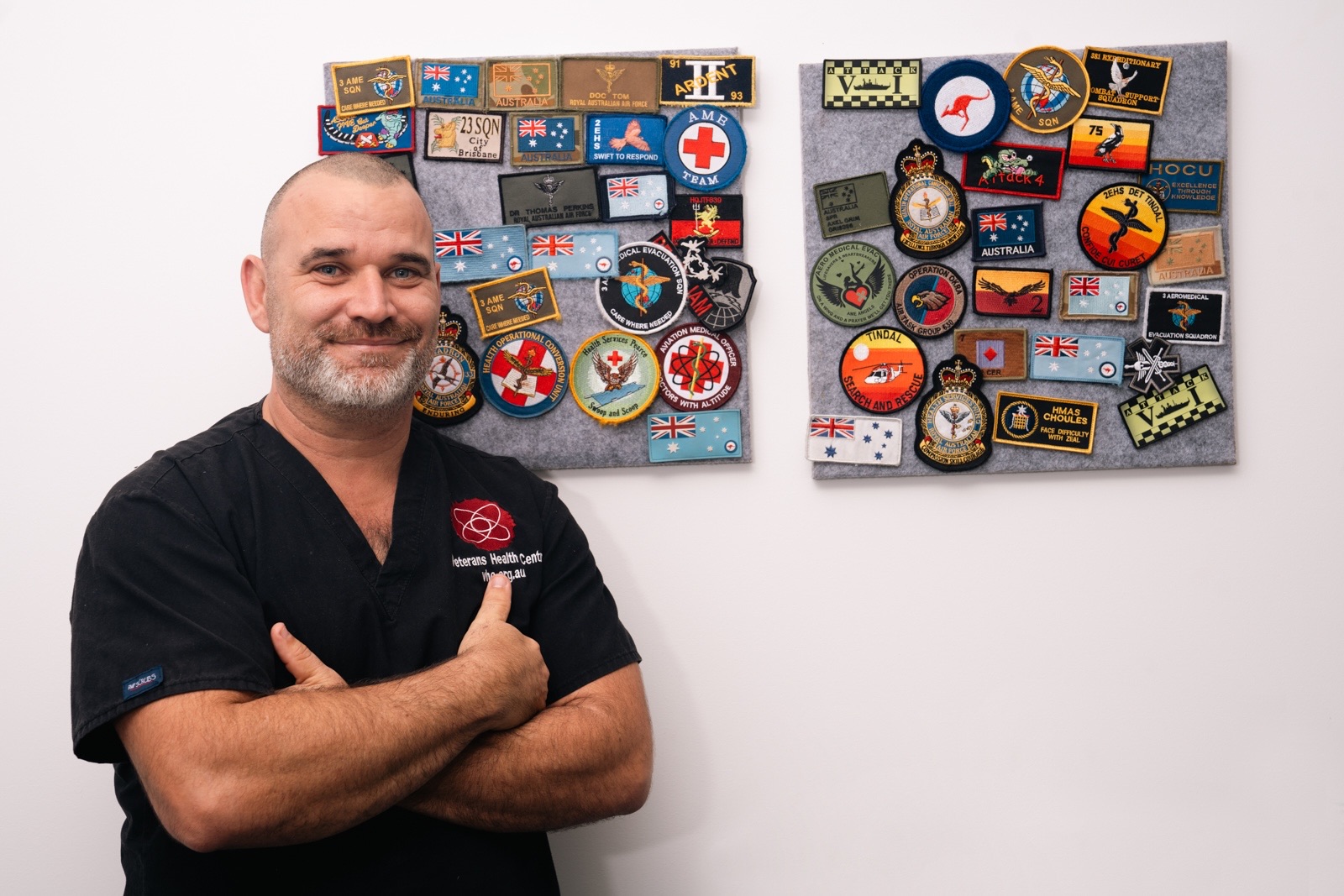
Reviewed by Dr Thomas Perkins
Founding doctor, Veterans Health Centre · former RAAF aviation medical officer · 13 years working exclusively with ADF members and veterans. Full profile →