
Blog › Conditions
Mental Health Claims: PTSD, Depression and What DVA Actually Needs
Mental health claims are among the most commonly lodged and most commonly under-evidenced. What a proper diagnosis looks like, how stressors are documented, and what treatment you can access now.
Mental health is the largest single area of DVA claiming, and the one where the gap between what veterans experience and what the paperwork shows is widest.
Part of that is the nature of the injury. Part of it is that these claims are frequently lodged with a GP letter describing distress rather than a diagnosis a delegate can act on.
Three companion guides, September 2026: non-liability health care (free treatment without a claim), what compensation is available, and what to do when DVA says there is nothing in your medical file.
Start with treatment, not the claim
One thing worth knowing before anything else: DVA funds treatment for mental health conditions without needing to accept them as service related. Non-liability health care covers this, and you do not have to wait for a claim outcome, or lodge a claim at all, to use it.
If you are struggling now, that is the fastest door. The claim can follow.
What a proper diagnosis looks like
DVA needs a named condition, diagnosed against DSM-5 criteria by an appropriately qualified practitioner — post-traumatic stress disorder, major depressive disorder, an anxiety disorder, alcohol use disorder. "Stress", "low mood" and "not coping" are symptoms, and symptoms cannot be assessed against a Statement of Principles.
Comorbidity is the norm rather than the exception. PTSD frequently travels with depression, an anxiety disorder and alcohol use, and each of those is separately claimable. Claiming one condition where four are present is one of the most costly simplifications a veteran can make.
Documenting the stressors
The Statements of Principles for mental health conditions turn on specified stressors and experiences, and the evidence has to connect your history to them concretely: what happened, when, where, and what your role was.
This is the part veterans find hardest, and understandably so. It does not require reliving everything in detail on paper — it requires the events being recorded accurately enough to engage the factor. A good report does that work carefully and without sensationalism.
Impairment, when the time comes
Once liability is accepted, psychiatric impairment is rated under GARP like any other condition, based on how the condition affects function — relationships, work, daily activity, self-care. It is rated by clinicians who do it regularly, because the scoring is not intuitive and an inexperienced assessor tends to under-rate it substantially.
See Permanent Impairment Assessments for how that process works.
Frequently asked questions
Do I need a psychiatrist's report to claim?
Not always. What is needed is a properly reasoned DSM-5 diagnosis from an appropriately qualified practitioner, with the stressors documented against the Statement of Principles.
Will claiming affect my current employment or security clearance?
A DVA claim is a claim for compensation and treatment. Concerns about disclosure are common and worth discussing directly with us or your advocate rather than left as a reason not to seek help.
Can I claim alcohol use disorder?
Yes. It has its own Statement of Principles, and it frequently arises as a sequela of an accepted mental health condition.
I was refused years ago. Should I try again?
Often, yes — particularly if the original claim was lodged without a formal diagnosis. See appeals for how a refusal is answered.
Where do I get help right now?
Open Arms — Veterans & Families Counselling provides free, confidential counselling on 1800 011 046, 24 hours a day. If you are in immediate danger, call 000.
Talk to us
If you want to know where you stand before spending anything, call 0429 146 039 or email reception@vhc.org.au for a no-obligation consult with the Veterans Health Centre in Ipswich, Queensland.
This article is general information for Australian veterans and is not legal or financial advice. Your entitlements depend on your service, your conditions and the evidence available.
Read next
- Guide: how to make a DVA claim, step by step
- Guide: Statements of Principles explained
- DVA claims — chart reviews and diagnostic assessments
- Permanent Impairment Assessments (GARP)
- SoP Library — every DVA Statement of Principles
- Claims Library — 366 Diagnostic Assessments
- Example reports
- Fees — $600 + GST per stage
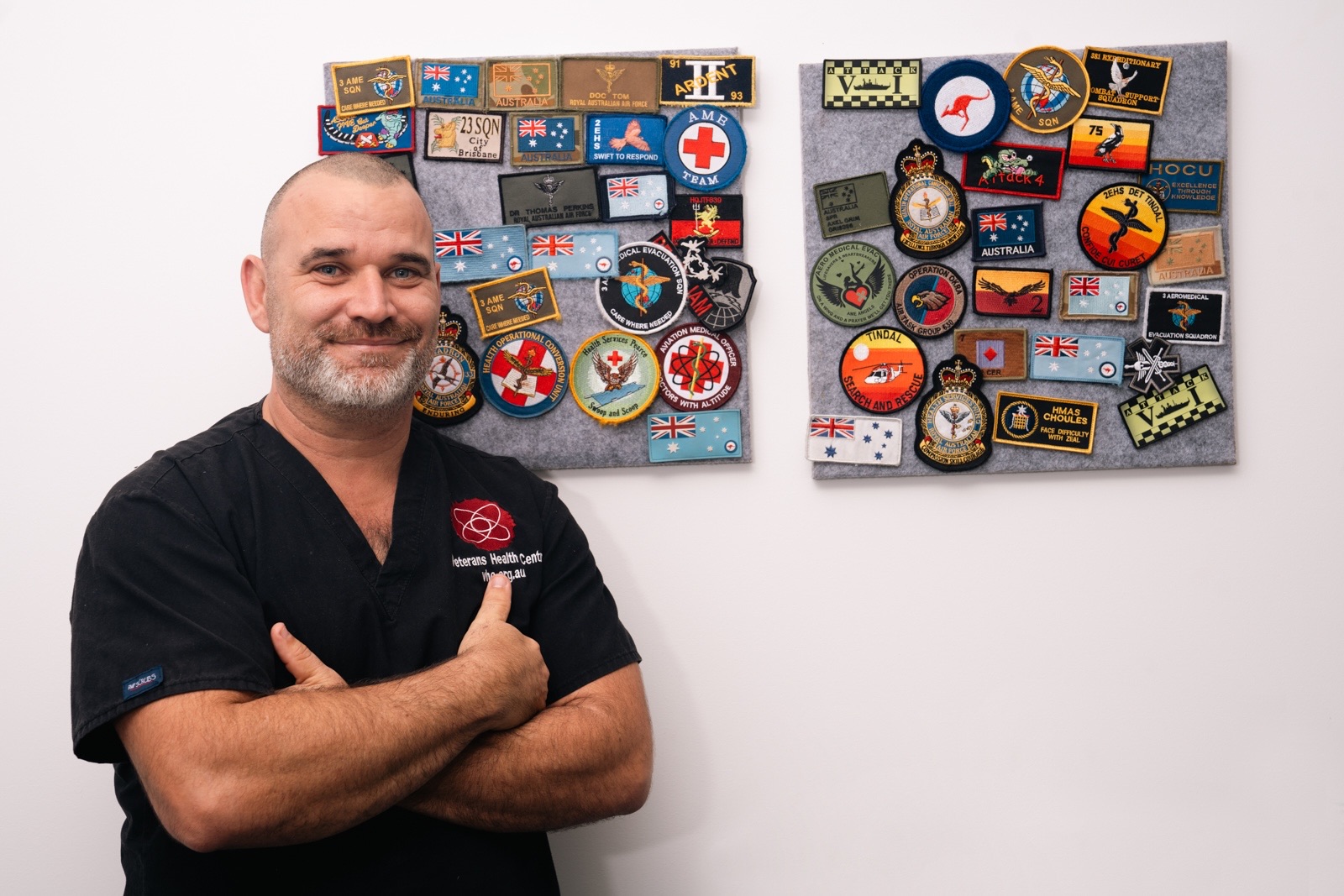
Reviewed by Dr Thomas Perkins
Founding doctor, Veterans Health Centre · former RAAF aviation medical officer · 13 years working exclusively with ADF members and veterans. Full profile →