
Blog › GARP series
GARP Chapter 16: Daily Living, Explained Simply
Six everyday tasks, scored from nil to completely dependent. You do not need help to score — doing it alone but with real difficulty counts.
Chapter 16 is used when a condition is bad enough to affect looking after yourself.
It is the safety net of the Guide. When the ordinary tables cannot capture how bad things are, this one can.
The six activities
- Movement in bed — sitting up, rolling over, getting out
- Transfers — chair to standing, on and off the toilet, in and out of bed
- Getting around — walking on the flat, on slopes, down stairs
- Dressing — socks, shoes, top and bottom half
- Personal hygiene — washing and grooming
- Feeding — eating and drinking, not cooking
How it is scored
Each of the six gets a code:
- 0 — can do it as well as anyone your age, or with only minor difficulty
- 1 — can do it alone, but with considerably more difficulty than others
- 4 — needs some personal help
- 6 — needs extensive help
- 8 — cannot contribute at all; completely dependent
Add up the six codes. The total gives your rating:
- 1–2 → 5 points
- 3–4 → 10
- 5–6 → 20
- 7–8 → 30
- 9–11 → 40
- 12–14 → 50
- 15–17 → 60
- 18+ → 70
The jump from 0 to 1 matters. "Considerably more difficulty than my mates" scores. You do not need help to score.
Six activities at code 1 gives 6, which is 20 points. That is a meaningful number for someone who still manages everything alone.
The second table: how you feel generally
There is also an "Other Impairment" table for non-specific things — pain, tiredness, prognosis:
- daily symptoms that are irritating but improve with medication, or tasks done badly through tiredness — 5
- daily symptoms with no useful treatment, noticeable loss of energy, avoiding tasks you used to do — 10
- intense daily symptoms impossible to ignore, marked loss of energy, avoiding many daily tasks — 20
You take the higher of the two tables.
When it is used
The Guide points to it for people who are bedbound, chairbound, housebound or nearly housebound — after a severe stroke, with advanced Parkinson's, severe heart or lung failure, liver or kidney failure, or some dementias.
It is also used whenever the ordinary tables do not fit or are not good enough.
The rule you have to get right
There are two ways to use this chapter, and they behave differently.
- Used to rate one condition, where its effects can be separated out — the rating can be combined with ratings for your other conditions.
- Used to rate everything together, because the effects cannot be separated — nothing else can be combined with it. It becomes your whole rating.
That second option can be worse for someone with several conditions. It is worth asking which way it was applied, and why.
What this means for you
- Answer honestly on all six. Even code 1 counts.
- Think about how long it takes you, not just whether you get there in the end.
- Include aids. A shower chair, a grabber, a long shoehorn. If you need it, that is difficulty.
- Bring your partner or carer. They will remember what you help with and you will not.
- Ask which way the chapter was used — one condition, or all together.
Common questions
I manage everything myself. Is this chapter any use to me?
Possibly. Code 1 is for doing it alone but with considerably more difficulty than your peers. Six of those is 20 points.
Does cooking count?
No. Feeding means eating and drinking. Preparing food is not included.
Is this instead of my other ratings?
It depends how it was applied. Rating a single condition combines. Rating everything together replaces.
Next in this series
Want a hand with yours?
If you have a permanent impairment assessment coming up, we do these every week. Call 0429 146 039 or email reception@vhc.org.au.
More reading
What is the GARP? · The chapter map · DVA Claims: PI points calculator · Permanent Impairment Assessments · DVA claims · SoP library
This is general information for Australian veterans. It is not legal advice. It explains Chapter 16 of the Guide to Determining Impairment and Compensation 2026 (F2026L00595), which started on 1 July 2026. The full rules are on the Federal Register of Legislation. Check your own situation with DVA on 1800 VETERAN (1800 838 372).
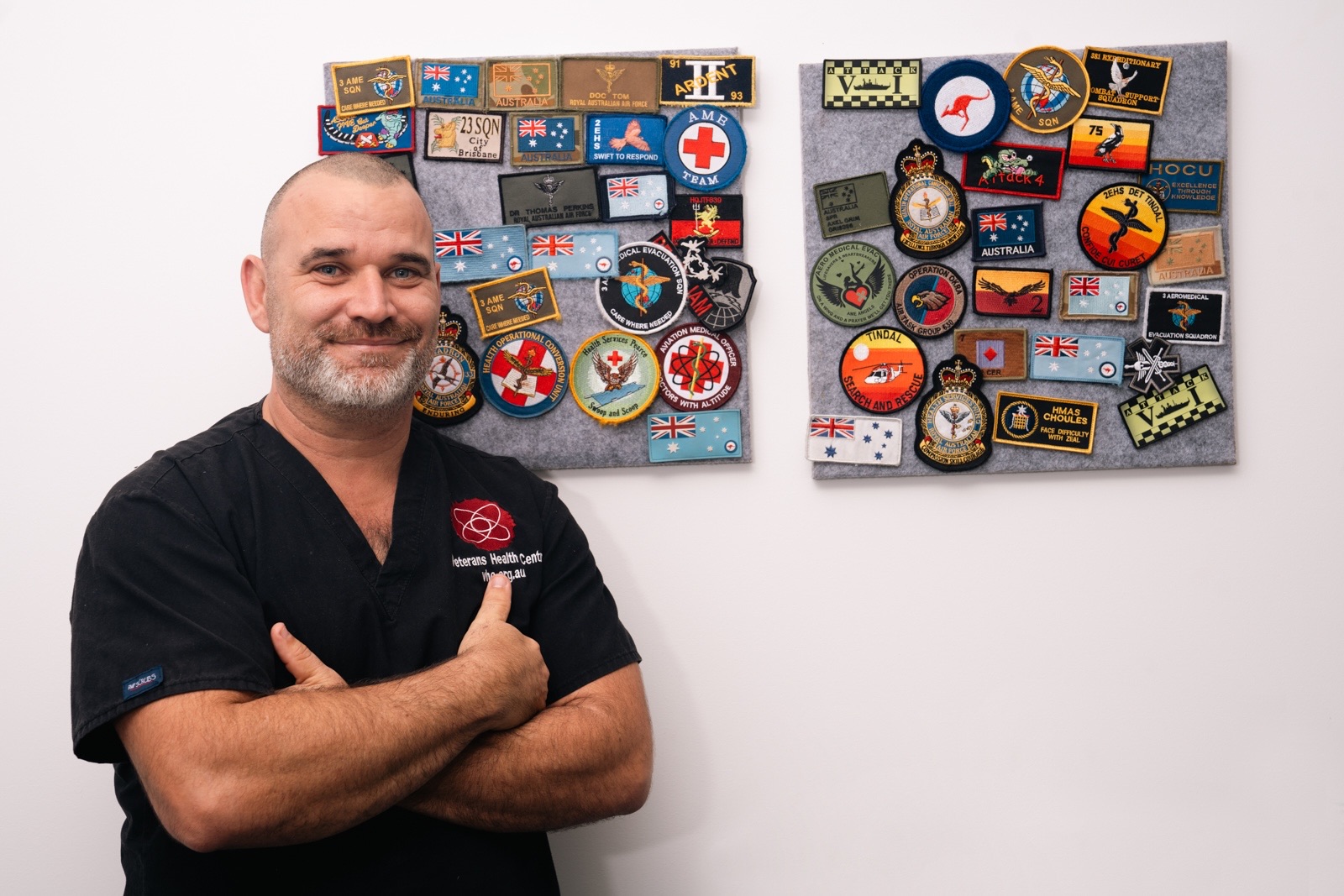
Reviewed by Dr Thomas Perkins
Founding doctor, Veterans Health Centre · former RAAF aviation medical officer · 13 years working exclusively with ADF members and veterans. Full profile →