Reference Determination Content
Suggested draft · fictitious patient
Right Ankle - Atfl Sprain
Evidence
The evidence that I have considered in making this decision includes:
- Formal Claim with supporting statements;
- A Statement of your Service from the Department of Defence;
- Copies of your Service Medical Records.
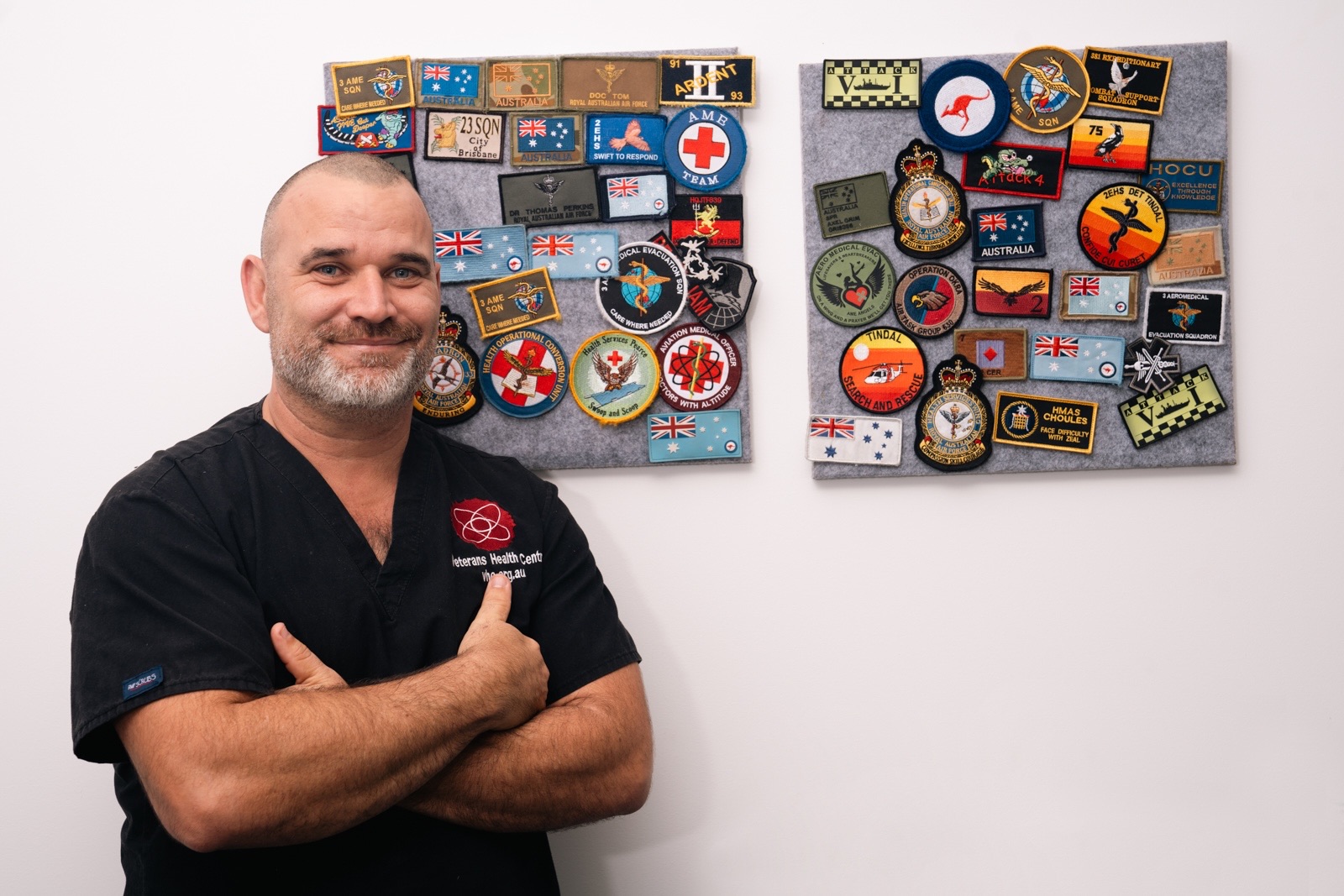
- A Diagnostic Assessment by Dr Thomas Perkins, General Practitioner, Veterans Health Centre, dated 17 March 2025;
- A Diagnosis Form (D9287) by Dr Thomas Perkins, General Practitioner, Veterans Health Centre, dated 17 March 2025;
- A pre-deployment medical examination by the medical officer, Garrison health centre, dated 24 August 2009;
- A patrol casualty record by the combat medic, Afghanistan, dated 18 January 2010;
- A role 2 consultation and X-ray report by the medical officer, Afghanistan, dated 20 January 2010;
- An ultrasound report by the radiologist, dated 5 July 2010;
- A physiotherapy assessment by the physiotherapist, Garrison health centre, dated 5 July 2010;
- A role 2 consultation and point-of-care ultrasound by the medical officer, Iraq, dated 24 August 2015;
- An MRI report by the radiologist, dated 10 February 2016;
- A sports medicine consultation by the sports physician, dated 2 March 2016;
- An outpatient health record by the medical officer, Garrison health centre, dated 14 June 2017;
- An MRI report by the radiologist, dated 3 July 2017;
- An orthopaedic consultation by the orthopaedic surgeon, dated 21 July 2017;
- A medical employment classification review and discharge medical by the medical officer, dated 3 September 2018;
- A clinical assessment by the general practitioner, dated 17 March 2025.
Your service
I have identified that you have the following service:
Australian Defence Force service between :
21 June 2004 and 3 September 2018
Right Ankle - Atfl Sprain
You have stated that your condition was caused by:
- experiencing a significant physical force applied to or through the affected joint, at the time of the clinical onset of a sprain to that joint ligament
- forceful stretching or high intensity use of a muscle or tendon at the time of the clinical onset of a strain to that muscle or tendon
Diagnosis: Atfl Sprain
Basis of diagnosis: The diagnosis was made in the Diagnostic Assessment by Dr Thomas Perkins dated 17 March 2025, and is supported by a role 2 consultation and X-ray report by the medical officer, Afghanistan, dated 20 January 2010.
I am satisfied this is the appropriate diagnosis.
In determining your claim for this condition, I have applied the SOP:
Statement of Principles concerning Sprain and Strain (Reasonable Hypothesis) (No. 27 of 2020)
which sets out the factors that can connect the condition with service.
I am satisfied that you have met the following factor:
- experiencing a significant physical force applied to or through the affected joint, at the time of the clinical onset of a sprain to that joint ligament
- forceful stretching or high intensity use of a muscle or tendon at the time of the clinical onset of a strain to that muscle or tendon
I have noted your contention as to the cause of this condition. The available evidence indicates, I have noted your contention to the cause of your condition. Your service medical records indicate that you presented to the health facility with sudden severe pain over the outside of the right ankle and along the outer calf, rapid swelling and bruising, and inability to bear weight on 18 January 2010.
The diagnosis was made clinically by the role 2 medical officer on 20 January 2010 from a clear inversion mechanism, tenderness over the anterior talofibular ligament, a positive anterior drawer test with a soft end point, and pain and weakness on resisted eversion with tenderness of the peroneus brevis, after X-ray excluded fracture. It was confirmed by ultrasound on 5 July 2010, which showed a thickened, hypoechoic ligament with a partial-thickness tear.
This has then led to further investigations and the diagnosis of your condition of Atfl Sprain. I have accepted your condition of Atfl Sprain.
Having considered your service records and the available medical evidence, I am satisfied the SOP is met and that this condition is related to your wartime service.
I have therefore accepted that this condition is related to your service with effect from 18 January 2010.
Right Ankle - Atfl Sprain (Worsening)
Evidence
The evidence that I have considered in making this decision includes:
- Formal Claim with supporting statements;
- A Statement of your Service from the Department of Defence;
- Copies of your Service Medical Records.
- A Diagnostic Assessment by Dr Thomas Perkins, General Practitioner, Veterans Health Centre, dated 17 March 2025;
- A Diagnosis Form (D9287) by Dr Thomas Perkins, General Practitioner, Veterans Health Centre, dated 17 March 2025;
- A pre-deployment medical examination by the medical officer, Garrison health centre, dated 24 August 2009;
- A patrol casualty record by the combat medic, Afghanistan, dated 18 January 2010;
- A role 2 consultation and X-ray report by the medical officer, Afghanistan, dated 20 January 2010;
- An ultrasound report by the radiologist, dated 5 July 2010;
- A physiotherapy assessment by the physiotherapist, Garrison health centre, dated 5 July 2010;
- A role 2 consultation and point-of-care ultrasound by the medical officer, Iraq, dated 24 August 2015;
- An MRI report by the radiologist, dated 10 February 2016;
- A sports medicine consultation by the sports physician, dated 2 March 2016;
- An outpatient health record by the medical officer, Garrison health centre, dated 14 June 2017;
- An MRI report by the radiologist, dated 3 July 2017;
- An orthopaedic consultation by the orthopaedic surgeon, dated 21 July 2017;
- A medical employment classification review and discharge medical by the medical officer, dated 3 September 2018;
- A clinical assessment by the general practitioner, dated 17 March 2025.
Your service
I have identified that you have the following service:
Australian Defence Force service between :
21 June 2004 and 3 September 2018
Right Ankle - Atfl Sprain (Worsening)
You have stated that the worsening of your condition was caused by:
- experiencing a significant physical force applied to or through the affected joint, at the time of the clinical worsening of a sprain to that joint ligament
- forceful stretching or high intensity use of a muscle or tendon at the time of the clinical worsening of a strain to that muscle or tendon
- inability to obtain appropriate clinical management for sprain or strain
Diagnosis: Atfl Sprain (Worsening)
Basis of diagnosis: The diagnosis was made in the Diagnostic Assessment by Dr Thomas Perkins dated 17 March 2025, and is supported by a role 2 consultation and X-ray report by the medical officer, Afghanistan, dated 20 January 2010.
I am satisfied this is the appropriate diagnosis.
In determining your claim for this condition, I have applied the SOP:
Statement of Principles concerning Sprain and Strain (Reasonable Hypothesis) (No. 27 of 2020)
which sets out the factors that can connect the condition with service.
I am satisfied that you have met the following factor:
- experiencing a significant physical force applied to or through the affected joint, at the time of the clinical worsening of a sprain to that joint ligament
- forceful stretching or high intensity use of a muscle or tendon at the time of the clinical worsening of a strain to that muscle or tendon
- inability to obtain appropriate clinical management for sprain or strain
I have noted your contention as to the cause of this condition. The available evidence indicates, I have noted your contention to the cause of your condition. Your service medical records indicate that you presented to the health facility with sudden severe pain over the outside of the right ankle and along the outer calf, rapid swelling and bruising, and inability to bear weight on 18 January 2010.
The diagnosis was made clinically by the role 2 medical officer on 20 January 2010 from a clear inversion mechanism, tenderness over the anterior talofibular ligament, a positive anterior drawer test with a soft end point, and pain and weakness on resisted eversion with tenderness of the peroneus brevis, after X-ray excluded fracture. It was confirmed by ultrasound on 5 July 2010, which showed a thickened, hypoechoic ligament with a partial-thickness tear.
After the condition arose, it was worsened during your service. On warlike service in Iraq on 22 August 2015 you stepped off the rear ramp of a truck at night carrying about 30 kilograms and your right foot landed in a vehicle rut, forcing the ankle into inversion under your full weight and load. In the same incident at Taji on 22 August 2015 the peroneus brevis was violently stretched as the ankle inverted against its contraction. On warlike service in Afghanistan in 2010 you had no physiotherapy or graded rehabilitation at your patrol base and returned to carrying full loads within ten days of the injury.
This has then led to further investigations and the diagnosis of your condition of Atfl Sprain (Worsening). I have accepted your condition of Atfl Sprain (Worsening).
Having considered your service records and the available medical evidence, I am satisfied the SOP is met and that the worsening of this condition is related to your wartime service.
I have therefore accepted that the worsening of this condition is related to your service with effect from 24 August 2015.