Reference Determination Content
Suggested draft · fictitious patient
Right Thigh - Hamstring Tendinopathy
Evidence
The evidence that I have considered in making this decision includes:
- Formal Claim with supporting statements;
- A Statement of your Service from the Department of Defence;
- Copies of your Service Medical Records.
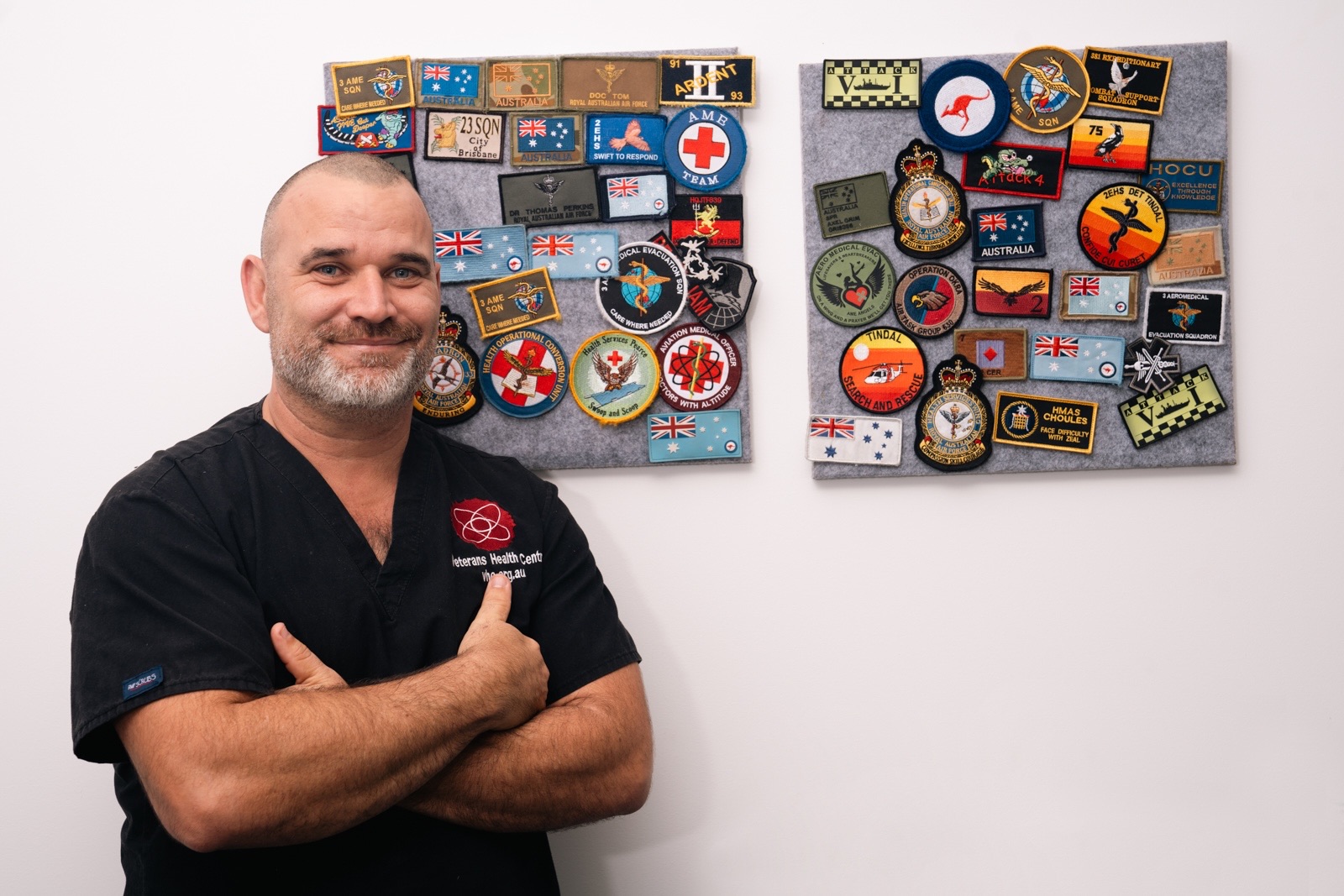
- A Diagnostic Assessment by Dr Thomas Perkins, General Practitioner, Veterans Health Centre, dated 9 June 2025;
- A Diagnosis Form (D9287) by Dr Thomas Perkins, General Practitioner, Veterans Health Centre, dated 9 June 2025;
- A pre-deployment medical examination by the medical officer, dated 21 November 2007;
- A role 2 treatment record by the medical officer, Afghanistan, dated 17 March 2008;
- An MRI right hip and thigh report by the radiologist, coalition hospital, dated 30 April 2008;
- An outpatient health record by the medical officer, Garrison health centre, dated 14 January 2009;
- A field treatment record by the medical officer, dated 6 September 2011;
- An MRI right hip and thigh report by the radiologist, dated 13 October 2011;
- A specialist consultation by the sports physician, dated 14 August 2012;
- A deployed treatment record by the medical officer, Afghanistan, dated 22 July 2013;
- An MRI right hip and thigh report by the radiologist, dated 4 October 2013;
- An ultrasound-guided injection report by the sports physician, dated 19 November 2013.
Your service
I have identified that you have the following service:
Australian Defence Force service between :
19 April 2000 and 8 March 2016
Right Thigh - Hamstring Tendinopathy
You have stated that your condition was caused by:
- experiencing a significant physical force applied to or through the affected joint, at the time of the clinical onset of a sprain to that joint ligament
- forceful stretching or high intensity use of a muscle or tendon at the time of the clinical onset of a strain to that muscle or tendon
Diagnosis: Hamstring Tendinopathy
Basis of diagnosis: The diagnosis was made in the Diagnostic Assessment by Dr Thomas Perkins dated 9 June 2025, and is supported by an MRI right hip and thigh report by the radiologist, coalition hospital, dated 30 April 2008.
I am satisfied this is the appropriate diagnosis.
In determining your claim for this condition, I have applied the SOP:
Statement of Principles concerning Sprain and Strain (Reasonable Hypothesis) (No. 27 of 2020)
which sets out the factors that can connect the condition with service.
I am satisfied that you have met the following factor:
- experiencing a significant physical force applied to or through the affected joint, at the time of the clinical onset of a sprain to that joint ligament
- forceful stretching or high intensity use of a muscle or tendon at the time of the clinical onset of a strain to that muscle or tendon
I have noted your contention as to the cause of this condition. The available evidence indicates, I have noted your contention to the cause of your condition. Your service medical records indicate that you presented to the health facility with sudden sharp pain in the right buttock with a pop, inability to keep running, posterior thigh bruising and pain on bending forward and climbing stairs on 17 March 2008.
The diagnosis was made clinically by the role 2 medical officer on 17 March 2008 after an acute injury with a pop in the buttock, tenderness at the ischial tuberosity, pain on resisted knee flexion and pain on passive hip flexion with the knee straight. MRI on 30 April 2008 confirmed a grade 2 strain of the proximal conjoint tendon and a sprain of the ischiofemoral ligament, which meets the Statement of Principles definitions of a strain, an injury to a muscle or tendon, and of a sprain, an injury to a joint ligament.
This has then led to further investigations and the diagnosis of your condition of Hamstring Tendinopathy. I have accepted your condition of Hamstring Tendinopathy.
Having considered your service records and the available medical evidence, I am satisfied the SOP is met and that this condition is related to your wartime service.
I have therefore accepted that this condition is related to your service with effect from 17 March 2008.
Right Thigh - Hamstring Tendinopathy (Worsening)
Evidence
The evidence that I have considered in making this decision includes:
- Formal Claim with supporting statements;
- A Statement of your Service from the Department of Defence;
- Copies of your Service Medical Records.
- A Diagnostic Assessment by Dr Thomas Perkins, General Practitioner, Veterans Health Centre, dated 9 June 2025;
- A Diagnosis Form (D9287) by Dr Thomas Perkins, General Practitioner, Veterans Health Centre, dated 9 June 2025;
- A pre-deployment medical examination by the medical officer, dated 21 November 2007;
- A role 2 treatment record by the medical officer, Afghanistan, dated 17 March 2008;
- An MRI right hip and thigh report by the radiologist, coalition hospital, dated 30 April 2008;
- An outpatient health record by the medical officer, Garrison health centre, dated 14 January 2009;
- A field treatment record by the medical officer, dated 6 September 2011;
- An MRI right hip and thigh report by the radiologist, dated 13 October 2011;
- A specialist consultation by the sports physician, dated 14 August 2012;
- A deployed treatment record by the medical officer, Afghanistan, dated 22 July 2013;
- An MRI right hip and thigh report by the radiologist, dated 4 October 2013;
- An ultrasound-guided injection report by the sports physician, dated 19 November 2013.
Your service
I have identified that you have the following service:
Australian Defence Force service between :
19 April 2000 and 8 March 2016
Right Thigh - Hamstring Tendinopathy (Worsening)
You have stated that the worsening of your condition was caused by:
- experiencing a significant physical force applied to or through the affected joint, at the time of the clinical worsening of a sprain to that joint ligament
- forceful stretching or high intensity use of a muscle or tendon at the time of the clinical worsening of a strain to that muscle or tendon
- inability to obtain appropriate clinical management for sprain or strain
Diagnosis: Hamstring Tendinopathy (Worsening)
Basis of diagnosis: The diagnosis was made in the Diagnostic Assessment by Dr Thomas Perkins dated 9 June 2025, and is supported by an MRI right hip and thigh report by the radiologist, coalition hospital, dated 30 April 2008.
I am satisfied this is the appropriate diagnosis.
In determining your claim for this condition, I have applied the SOP:
Statement of Principles concerning Sprain and Strain (Reasonable Hypothesis) (No. 27 of 2020)
which sets out the factors that can connect the condition with service.
I am satisfied that you have met the following factor:
- experiencing a significant physical force applied to or through the affected joint, at the time of the clinical worsening of a sprain to that joint ligament
- forceful stretching or high intensity use of a muscle or tendon at the time of the clinical worsening of a strain to that muscle or tendon
- inability to obtain appropriate clinical management for sprain or strain
I have noted your contention as to the cause of this condition. The available evidence indicates, I have noted your contention to the cause of your condition. Your service medical records indicate that you presented to the health facility with sudden sharp pain in the right buttock with a pop, inability to keep running, posterior thigh bruising and pain on bending forward and climbing stairs on 17 March 2008.
The diagnosis was made clinically by the role 2 medical officer on 17 March 2008 after an acute injury with a pop in the buttock, tenderness at the ischial tuberosity, pain on resisted knee flexion and pain on passive hip flexion with the knee straight. MRI on 30 April 2008 confirmed a grade 2 strain of the proximal conjoint tendon and a sprain of the ischiofemoral ligament, which meets the Statement of Principles definitions of a strain, an injury to a muscle or tendon, and of a sprain, an injury to a joint ligament.
After the condition arose, it was worsened during your service. On warlike service in Afghanistan on 22 July 2013, while serving with a force protection element at a multinational base in Uruzgan province, you dismounted at speed from the rear ramp of a moving protected vehicle during an indirect fire alarm, in body armour and carrying a rifle and radio. In the same incident on 22 July 2013 on warlike service the right hamstring contracted eccentrically against the sudden forced hip flexion. Following the worsening of 22 July 2013 on warlike service, no physiotherapist or imaging was available at the base, and you continued force protection duties, including vehicle dismounts and sentry duty, for the remaining six weeks of the deployment with analgesia only.
This has then led to further investigations and the diagnosis of your condition of Hamstring Tendinopathy (Worsening). I have accepted your condition of Hamstring Tendinopathy (Worsening).
Having considered your service records and the available medical evidence, I am satisfied the SOP is met and that the worsening of this condition is related to your wartime service.
I have therefore accepted that the worsening of this condition is related to your service with effect from 22 July 2013.