Reference Determination Content
Suggested draft · fictitious patient
Skin - Irritant Contact Dermatitis
Evidence
The evidence that I have considered in making this decision includes:
- Formal Claim with supporting statements;
- A Statement of your Service from the Department of Defence;
- Copies of your Service Medical Records.
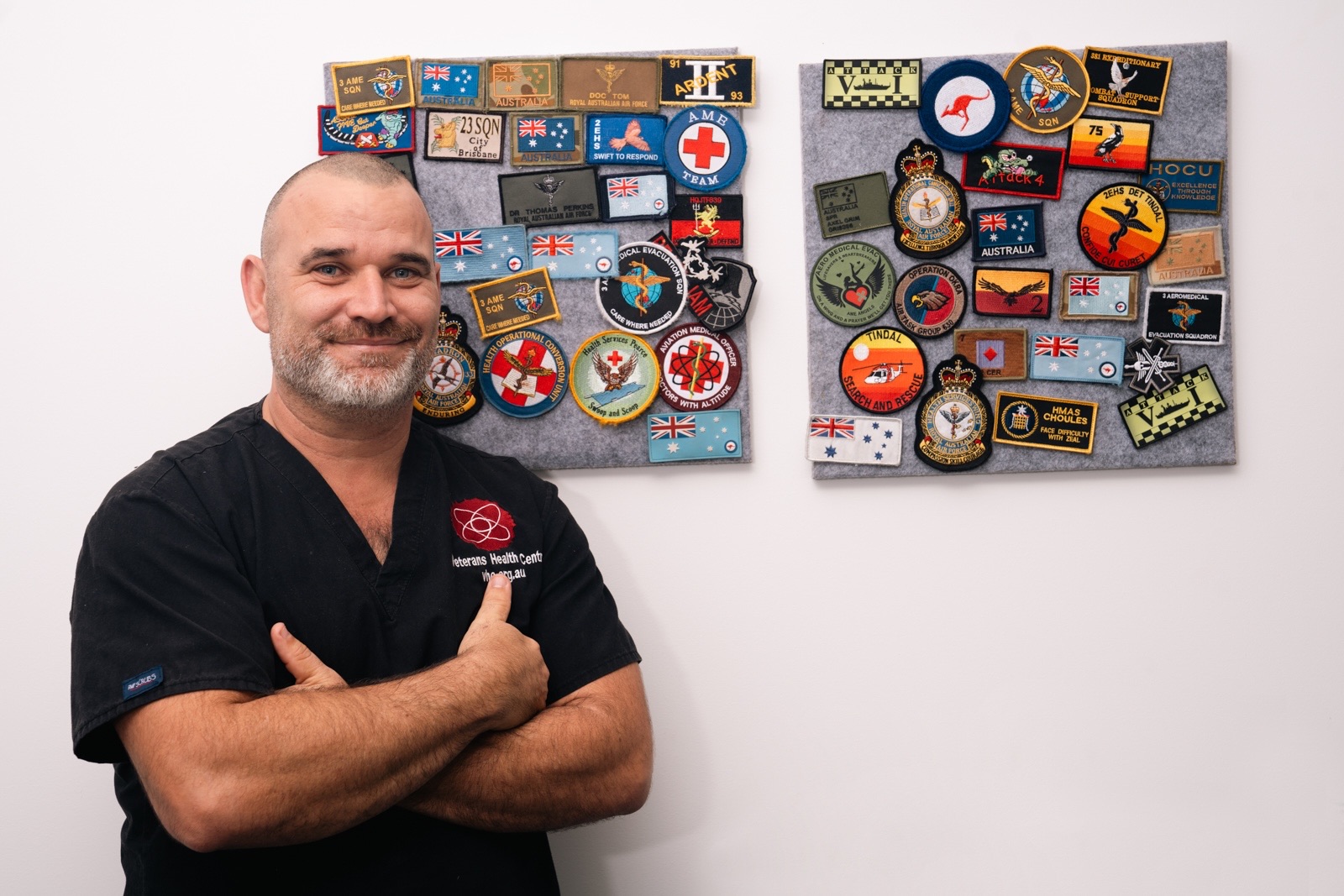
- A Diagnostic Assessment by Dr Thomas Perkins, General Practitioner, Veterans Health Centre, dated 4 March 2025;
- A Diagnosis Form (D9287) by Dr Thomas Perkins, General Practitioner, Veterans Health Centre, dated 4 March 2025;
- A pre-deployment medical examination by the medical officer, RAAF base health centre, dated 2 March 2009;
- An aircraft maintenance log by the maintenance supervisor, Middle East air base, dated 7 August 2009;
- A deployed medical record by the medical officer, Middle East air base, dated 10 August 2009;
- A dermatology consultation and patch test report by the dermatologist, dated 14 January 2010;
- A periodic health examination by the medical officer, RAAF base health centre, dated 21 September 2011;
- A role 1 medical record by the medical officer, Afghanistan, dated 16 March 2013;
- A dermatology review and repeat patch testing by the dermatologist, dated 25 June 2013;
- A separation medical examination by the medical officer, RAAF base health centre, dated 26 October 2018.
Your service
I have identified that you have the following service:
Australian Defence Force service between :
5 March 2002 and 26 October 2018
Skin - Irritant Contact Dermatitis
You have stated that your condition was caused by:
- having the affected area of skin exposed to an irritant within the three days before the clinical onset of irritant contact dermatitis
Diagnosis: Irritant Contact Dermatitis
Basis of diagnosis: The diagnosis was made in the Diagnostic Assessment by Dr Thomas Perkins dated 4 March 2025, and is supported by a dermatology consultation and patch test report by the dermatologist, dated 14 January 2010.
I am satisfied this is the appropriate diagnosis.
In determining your claim for this condition, I have applied the SOP:
Statement of Principles concerning Irritant Contact Dermatitis (Reasonable Hypothesis) (No. 3 of 2021)
which sets out the factors that can connect the condition with service.
I am satisfied that you have met the following factor:
- having the affected area of skin exposed to an irritant within the three days before the clinical onset of irritant contact dermatitis
I have noted your contention as to the cause of this condition. The available evidence indicates, I have noted your contention to the cause of your condition. Your service medical records indicate that you presented to the health facility with burning, stinging and itch of the backs of both hands, finger webs and wrists, followed within a day by redness, swelling, fine blisters and scaling confined to the areas under your gloves on 10 August 2009.
The diagnosis was confirmed by a dermatologist on 14 January 2010. Examination showed dermatitis sharply confined to the backs of the hands, finger webs and wrists, the areas in contact with fuel, solvents and cleansers, and patch testing to the standard series, an aviation series and your own workplace materials was negative, excluding allergic contact dermatitis. You had no history of atopic dermatitis, and the eruption was not caused by heat, friction or sunlight. This meets the Statement of Principles definition of irritant contact dermatitis: inflammation of an area of skin from an irritant applied to the same area, involving direct tissue injury.
This has then led to further investigations and the diagnosis of your condition of Irritant Contact Dermatitis. I have accepted your condition of Irritant Contact Dermatitis.
Having considered your service records and the available medical evidence, I am satisfied the SOP is met and that this condition is related to your wartime service.
I have therefore accepted that this condition is related to your service with effect from 8 August 2009.
Skin - Irritant Contact Dermatitis (Worsening)
Evidence
The evidence that I have considered in making this decision includes:
- Formal Claim with supporting statements;
- A Statement of your Service from the Department of Defence;
- Copies of your Service Medical Records.
- A Diagnostic Assessment by Dr Thomas Perkins, General Practitioner, Veterans Health Centre, dated 4 March 2025;
- A Diagnosis Form (D9287) by Dr Thomas Perkins, General Practitioner, Veterans Health Centre, dated 4 March 2025;
- A pre-deployment medical examination by the medical officer, RAAF base health centre, dated 2 March 2009;
- An aircraft maintenance log by the maintenance supervisor, Middle East air base, dated 7 August 2009;
- A deployed medical record by the medical officer, Middle East air base, dated 10 August 2009;
- A dermatology consultation and patch test report by the dermatologist, dated 14 January 2010;
- A periodic health examination by the medical officer, RAAF base health centre, dated 21 September 2011;
- A role 1 medical record by the medical officer, Afghanistan, dated 16 March 2013;
- A dermatology review and repeat patch testing by the dermatologist, dated 25 June 2013;
- A separation medical examination by the medical officer, RAAF base health centre, dated 26 October 2018.
Your service
I have identified that you have the following service:
Australian Defence Force service between :
5 March 2002 and 26 October 2018
Skin - Irritant Contact Dermatitis (Worsening)
You have stated that the worsening of your condition was caused by:
- having the affected area of skin exposed to an irritant within the three days before the clinical worsening of irritant contact dermatitis
- inability to obtain appropriate clinical management for irritant contact dermatitis
Diagnosis: Irritant Contact Dermatitis (Worsening)
Basis of diagnosis: The diagnosis was made in the Diagnostic Assessment by Dr Thomas Perkins dated 4 March 2025, and is supported by a dermatology consultation and patch test report by the dermatologist, dated 14 January 2010.
I am satisfied this is the appropriate diagnosis.
In determining your claim for this condition, I have applied the SOP:
Statement of Principles concerning Irritant Contact Dermatitis (Reasonable Hypothesis) (No. 3 of 2021)
which sets out the factors that can connect the condition with service.
I am satisfied that you have met the following factor:
- having the affected area of skin exposed to an irritant within the three days before the clinical worsening of irritant contact dermatitis
- inability to obtain appropriate clinical management for irritant contact dermatitis
I have noted your contention as to the cause of this condition. The available evidence indicates, I have noted your contention to the cause of your condition. Your service medical records indicate that you presented to the health facility with burning, stinging and itch of the backs of both hands, finger webs and wrists, followed within a day by redness, swelling, fine blisters and scaling confined to the areas under your gloves on 10 August 2009.
The diagnosis was confirmed by a dermatologist on 14 January 2010. Examination showed dermatitis sharply confined to the backs of the hands, finger webs and wrists, the areas in contact with fuel, solvents and cleansers, and patch testing to the standard series, an aviation series and your own workplace materials was negative, excluding allergic contact dermatitis. You had no history of atopic dermatitis, and the eruption was not caused by heat, friction or sunlight. This meets the Statement of Principles definition of irritant contact dermatitis: inflammation of an area of skin from an irritant applied to the same area, involving direct tissue injury.
After the condition arose, it was worsened during your service. From 13 to 15 March 2013, on warlike service in Afghanistan, hydraulic fluid repeatedly contaminated your hands and forearms, and you were required to apply alcohol-based hand rub many times a day during a gastroenteritis outbreak and used insect repellent on your hands for vector protection. On warlike service in Afghanistan in 2013 there was no dermatology service, no potent topical corticosteroid or suitable protective gloves, and you could not be withdrawn from hydraulic work.
This has then led to further investigations and the diagnosis of your condition of Irritant Contact Dermatitis (Worsening). I have accepted your condition of Irritant Contact Dermatitis (Worsening).
Having considered your service records and the available medical evidence, I am satisfied the SOP is met and that the worsening of this condition is related to your wartime service.
I have therefore accepted that the worsening of this condition is related to your service with effect from 16 March 2013.